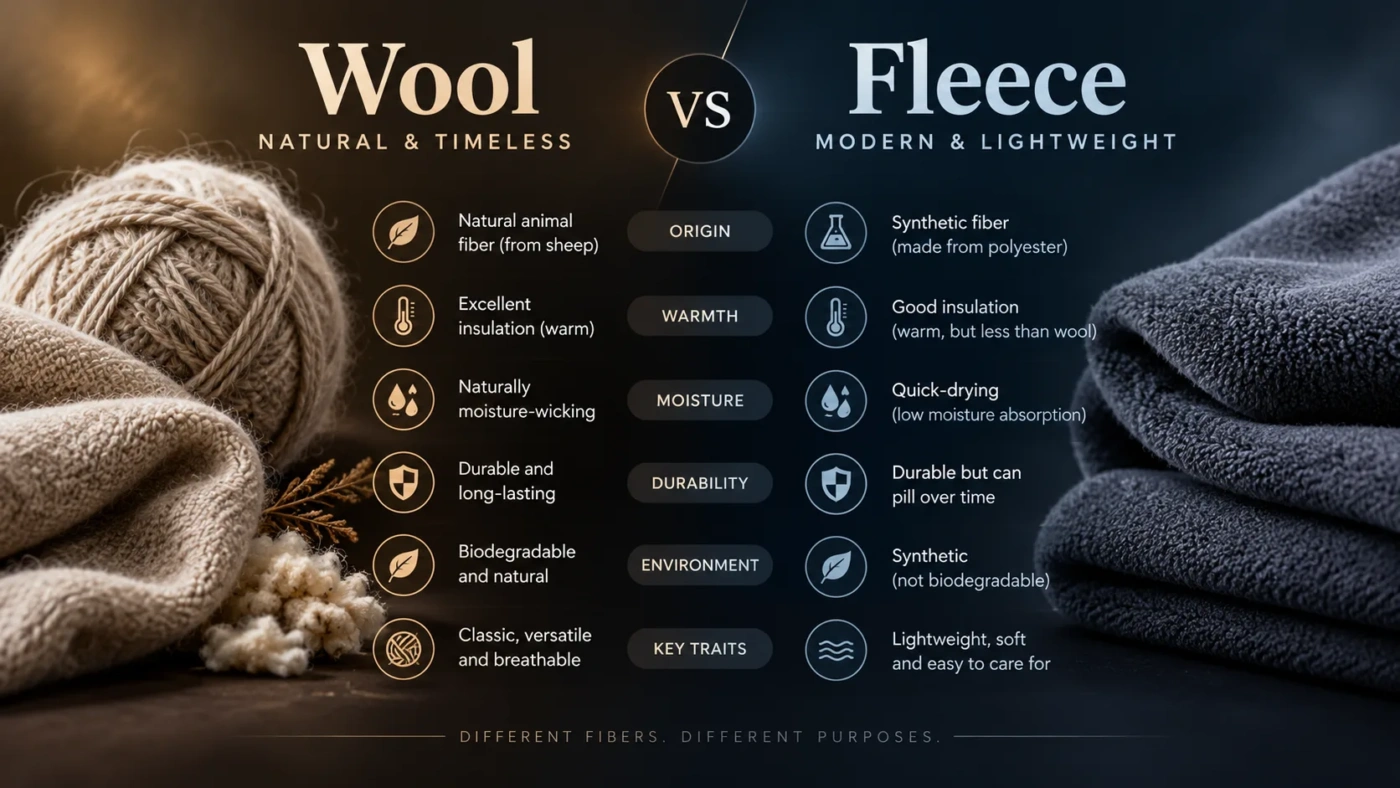
Wool and fleece can both keep you warm, but they solve the cold-weather problem differently. Wool handles temperature swings, odor, and extended wear especially well, while synthetic fleece is usually lighter, faster to dry, easier to wash, and more practical for active use. For a sweater, travel layer, or clothing worn for several days, wool often earns its higher cost. For hiking, everyday jackets, kids’ clothing, or a layer that will be washed frequently, fleece is often the easier option.
- Sweat Changes The Wool Versus Fleece Decision
- Wool Can Be Worn Longer Between Washes
- Fleece Wins When Washing And Drying Need To Be Easy
- Wind Can Make A Warm Fleece Feel Colder Than Expected
- Skin Feel Depends Heavily On The Type Of Wool
- Durability Comes With Different Weak Points
- The Environmental Trade-Off Is Not As Simple As Natural Versus Synthetic
- Where The Extra Cost Of Wool Makes Sense
- Sometimes The Better System Uses Both
| Decision Point | Wool | Fleece |
|---|---|---|
| Warmth | Warm and good at regulating temperature across changing conditions | High warmth for relatively low weight, depending on fabric thickness |
| Drying | Can insulate while damp but usually takes longer to dry | Absorbs little water and generally dries quickly |
| Odor | Usually handles repeated wear well, particularly fine merino wool | Can retain body odors more readily after active use |
| Care | May require gentler washing and careful drying | Usually easy to machine wash and quick to return to service |
| Weight | Varies widely; substantial wool garments can be relatively heavy | Often provides good insulation without much weight |
| Typical Cost | Often more expensive, especially for fine merino garments | Available across a wide range of lower-cost clothing |
| Heat And Sparks | Naturally more resistant to ignition and does not melt like polyester | Most versions are polyester and can melt when exposed to high heat |
Sweat Changes The Wool Versus Fleece Decision
Standing outside in cold weather is not the same problem as climbing a steep trail in cold weather. During physical activity, moisture management can matter as much as insulation.
Most modern fleece is made from polyester. Polyester fibers absorb very little water, so a fleece layer can move moisture away from your skin and dry relatively quickly after you stop exercising. That makes fleece especially useful for hiking, skiing, running warmups, outdoor work, and other situations where clothing repeatedly becomes damp from sweat.
Wool behaves differently. Wool fibers can take up moisture within their structure without immediately feeling soaked on the surface. A wool garment can therefore remain comfortable through a wider range of temperatures and continue providing insulation when damp. It does not, however, mean wool dries as quickly as fleece. After becoming thoroughly wet, a thick wool garment may need considerably more drying time.
Wool Can Be Worn Longer Between Washes
Odor is one of the clearest practical differences between the two materials. A wool base layer or sweater can often be worn repeatedly without developing strong body odor as quickly as a comparable polyester garment. That characteristic is one reason merino wool is popular for travel, multi-day hikes, and minimalist wardrobes.
Polyester fleece can be comfortable throughout a day, but repeated active use tends to expose its weakness. Oils and odor-producing compounds can remain within synthetic fibers, so a fleece worn during strenuous activity may need washing more frequently.
This difference matters less for an outer fleece jacket that rarely touches your skin. It matters much more for next-to-skin layers, pullovers worn indoors all day, or clothing packed for several days of travel.
Fleece Wins When Washing And Drying Need To Be Easy
For frequent laundry, fleece is difficult to beat. Most polyester fleece garments tolerate ordinary machine washing, do not require reshaping, and dry quickly. A children’s fleece jacket, work layer, or heavily used outdoor garment can go through repeated wash cycles with relatively little effort.
Wool demands more attention. Care instructions vary by garment, and many modern wool products are machine washable, but high heat and aggressive washing can still cause shrinkage, distortion, or felting. Dryers are especially risky when the care label does not specifically permit tumble drying.
The garment label matters more than the fiber name alone. A machine-washable merino sweater, a traditional heavy wool sweater, and a wool-synthetic blend can have very different care requirements. Fleece can also contain stretch fibers, coatings, or mixed materials that change its washing instructions.
Wind Can Make A Warm Fleece Feel Colder Than Expected
Warmth ratings do not tell the entire story outdoors. Many fleece fabrics allow air to pass through fairly easily. That breathability feels comfortable during activity, but a cold wind can remove heat quickly unless the fleece is paired with a shell.
Dense wool fabrics can offer more wind resistance than an open fleece knit, although wool clothing also varies enormously. A loosely knitted wool sweater is not a windproof layer either.
For windy hiking conditions, the practical system is often fleece plus a lightweight wind-resistant shell rather than an extremely thick fleece. That arrangement lets you remove the shell when activity increases and restore wind protection when you stop.
Wool can also be part of a layered system. A merino base layer underneath fleece is a particularly useful combination: the wool sits against the skin for comfort and odor control, while fleece adds lightweight insulation and faster-drying loft.
Skin Feel Depends Heavily On The Type Of Wool
The stereotype that wool is always itchy comes mainly from garments made with coarser fibers. Fine merino wool can feel much softer against the skin and is widely used for base layers, T-shirts, socks, and lightweight sweaters. Individual sensitivity still varies, however, and some people dislike even fine wool.
Fleece is usually soft immediately. It does not have the prickly sensation associated with coarse wool, making it an easy choice for blankets, casual jackets, pajamas, and clothing worn over short sleeves.
There is another comfort difference: static. Polyester fleece can build up static electricity, especially in dry indoor environments. Wool can also generate static under some conditions, but synthetic fleece is particularly known for it.
Durability Comes With Different Weak Points
Neither material simply lasts longer in every situation. Fleece handles repeated washing and rough everyday use well, but its surface may eventually pill or flatten. Some fleece fabrics also shed tiny synthetic fibers during wear and washing.
Wool can remain attractive for many years when cared for properly, yet friction can create pills, careless washing can shrink it, and stored garments may need protection from clothes moths and similar textile pests.
Heat exposure creates another difference. Wool is naturally difficult to ignite compared with many common clothing fibers and tends to char rather than melt. Polyester fleece can melt when exposed to flames, hot metal, or flying sparks. Around campfires, fireplaces, welding, or similar heat sources, that behavior deserves consideration.
The Environmental Trade-Off Is Not As Simple As Natural Versus Synthetic
Wool is an animal-derived natural fiber and is biodegradable under suitable conditions. Fleece is usually made from polyester, which comes from petrochemical feedstocks, although recycled-polyester fleece is widely available. During washing and wear, synthetic textiles can release microfibers that persist in the environment.
That does not make every wool garment environmentally preferable by default. Sheep farming requires land and resources and produces agricultural emissions. Processing, dyeing, garment longevity, washing habits, recycled content, and how long the clothing remains in use all affect the larger footprint.
A durable garment worn for years is generally a different purchase from inexpensive clothing replaced every season, regardless of which fiber appears on the label.
Where The Extra Cost Of Wool Makes Sense
Wool often carries a higher purchase price, with fine merino clothing usually sitting toward the expensive end of everyday outdoor apparel. Paying more makes the most sense when you will actually benefit from the properties that wool provides.
Travel is a good example. Someone packing two shirts for several days may value a merino garment that can be worn repeatedly without frequent washing. The same applies to backpacking, where reducing spare clothing can offset some of wool’s higher cost.
For a jacket kept in the car, a school fleece, a workshop layer, or something that will be washed constantly, those advantages may have little value. An inexpensive fleece can perform the job with less care and lower replacement cost.
Sometimes The Better System Uses Both
Wool and fleece do not have to compete for the same position in your wardrobe. In cold outdoor conditions, they can work better together than either does alone.
A thin merino wool base layer can sit against the skin, where its temperature regulation and odor resistance are useful. A fleece can then provide additional loft and insulation without adding excessive weight. In wind or rain, a separate shell can cover both.
For everyday clothing, the split is equally straightforward. Wool makes more sense when you want a sweater or base layer that stays comfortable through long wear and needs less frequent washing. Fleece fits situations where easy care, fast drying, low weight, and lower cost matter more.
For repeated travel or long wear, wool earns its price most clearly; for active, washable, quick-drying insulation, fleece is usually the more practical layer.