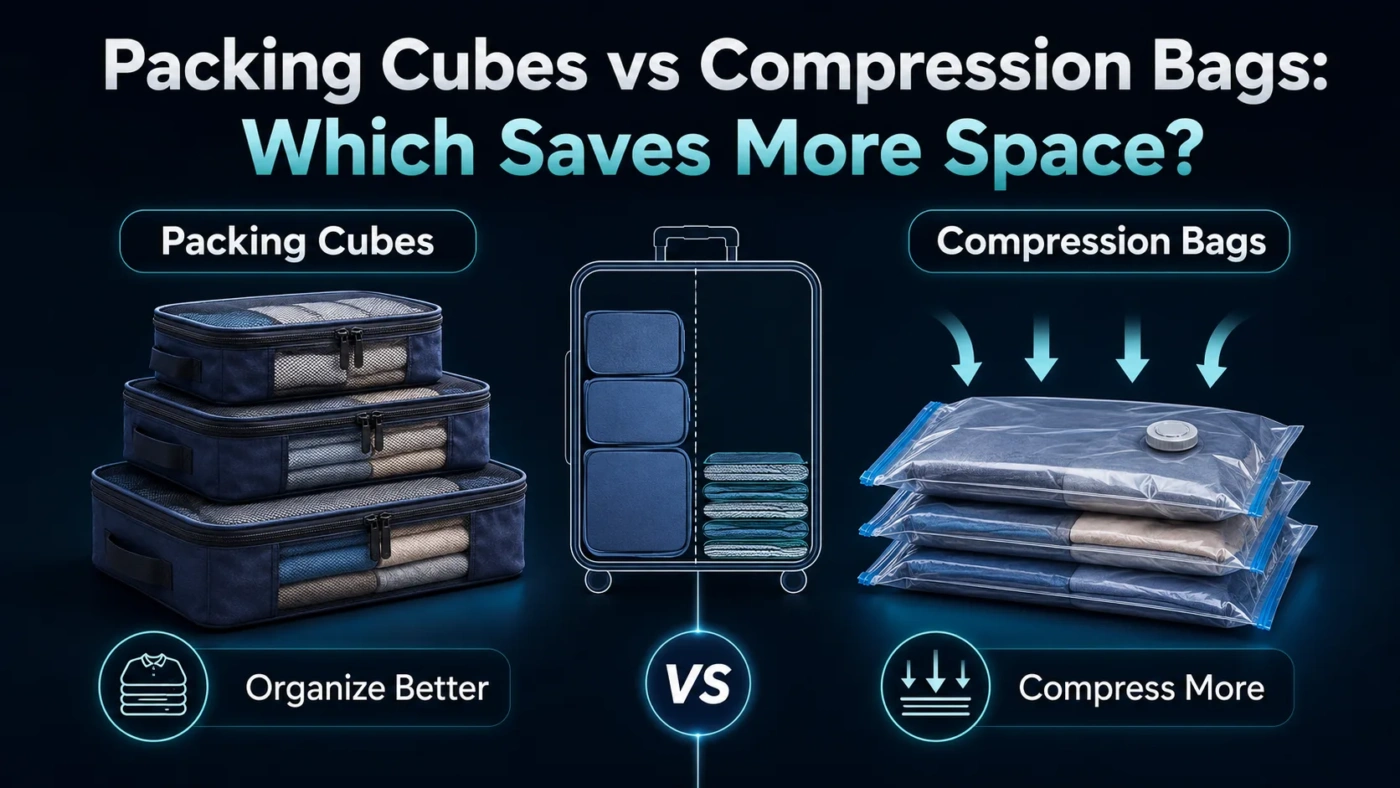
Packing cubes make a suitcase easier to organize, while compression bags can reduce the physical volume of soft clothing more aggressively. If the only question is which saves more space, compression bags usually win for bulky, flexible items such as jackets, sweaters, and spare outfits. If the question is which one makes packing easier, cleaner, and more practical during a trip, packing cubes often feel better in daily use.
- Main Differences
- What Packing Cubes Do Better
- What Compression Bags Do Better
- Which One Saves More Space?
- Space Saving By Item Type
- Choose Packing Cubes If
- Choose Compression Bags If
- Best Choice By Travel Style
- Decision Tree
- Common Misunderstandings
- Compression Bags Do Not Make Luggage Lighter
- Packing Cubes Are Not Just For Neat People
- More Compression Is Not Always Better
- You Can Use Both Together
- Price And Long-Term Value
- Best Overall Choice
- FAQ
- Do Packing Cubes Actually Save Space?
- Are Compression Bags Better Than Packing Cubes?
- Do Compression Bags Wrinkle Clothes?
- Can I Use Packing Cubes Inside Compression Bags?
- Which Is Better For Carry-On Luggage?
| Feature | Packing Cubes | Compression Bags |
|---|---|---|
| Space Saving | Moderate; improves layout more than volume | High for soft, bulky clothing |
| Best Use | Organizing outfits, categories, and daily access | Reducing bulk before packing |
| Ease of Access | Very easy to open, move, and repack | Less convenient once sealed or compressed |
| Wrinkle Risk | Lower when clothes are folded or rolled neatly | Higher because clothes are squeezed tightly |
| Weight Control | Helps you see what you packed | Can tempt you to pack too much weight |
| Carry-On Travel | Better for frequent opening and security checks | Better when bulky clothing is the main problem |
| Laundry Separation | Good, especially with separate cubes | Very good for isolating dirty or damp items |
| Best Overall Fit | Most travelers and organized packers | Overpackers, winter travel, and bulky soft items |
Main Differences
The main difference is that packing cubes organize space, while compression bags reduce volume. A packing cube keeps shirts, underwear, socks, or outfits in tidy blocks so the suitcase fills more evenly. It does not usually remove much air from the clothing.
A compression bag squeezes air out of soft items. Some styles roll air out manually, while others use a zipper or compression panel. This can make bulky clothing flatter, but the packed items may become dense and less flexible inside the suitcase.
Short answer: compression bags usually save more space, but packing cubes are often better for keeping your suitcase usable during the trip.
What Packing Cubes Do Better
Packing cubes are best when the goal is order. They turn loose clothing into separate sections, which makes it easier to pack by outfit, clothing type, person, or trip stage. This matters when you need one clean shirt without disturbing the whole suitcase.
They also help keep a suitcase stable. Instead of small items sliding into corners, the cubes create predictable shapes. That can make a carry-on easier to close, even when the actual clothing volume has not changed much.
What Compression Bags Do Better
Compression bags are better when bulk is the problem. Soft items such as fleece, sweaters, puffy layers, spare outfits, and children’s clothing can take up a lot of space because they trap air. Compressing them can free up room quickly.
The trade-off is convenience. Once a bag is compressed, opening it during a trip can undo the space saving. Clothes may also come out more wrinkled, especially if they were packed tightly for several days.
Which One Saves More Space?
Compression bags save more space in pure volume terms. If you pack a sweater, jacket, hoodie, or soft clothing stack into a compression bag, it can become noticeably flatter. This is where compression bags clearly beat standard packing cubes.
However, suitcase space is not only about volume. Shape matters too. A hard, compressed bundle can become awkward if it does not fit the suitcase corners well. Packing cubes may save less volume, but their rectangular shape can make the suitcase easier to fill efficiently.
Practical packing note: saving space does not reduce weight. Compression can make it easier to exceed airline or luggage weight limits because more items fit into the same bag.
Space Saving By Item Type
| Item Type | Better Choice | Reason |
|---|---|---|
| T-shirts | Packing Cubes | They already pack flat and benefit more from organization. |
| Sweaters | Compression Bags | They trap air and shrink well under pressure. |
| Underwear And Socks | Packing Cubes | Small items are easier to sort in cubes or small pouches. |
| Puffy Jackets | Compression Bags | Soft insulation can compress a lot, but should not stay crushed longer than needed. |
| Dress Shirts | Packing Cubes | They need structure and wrinkle control more than pressure. |
| Dirty Laundry | Compression Bags | They can separate odors and reduce bulk on the return trip. |
Choose Packing Cubes If
- You want a suitcase that stays organized after the first night.
- You pack outfits, categories, or multiple people in one suitcase.
- You open your luggage often during the trip.
- You care about reducing wrinkles.
- You prefer fast packing and easy repacking.
- You travel with a carry-on and need quick access to items.
Packing cubes are the safer everyday choice for most travelers. They do not always create dramatic space savings, but they make the space easier to use.
Choose Compression Bags If
- Your suitcase is full because of bulky clothing.
- You are packing for cold weather or a long trip.
- You need to fit spare clothes into a small bag.
- You are packing items you will not need until later.
- You want a separate place for laundry on the return journey.
- You do not mind extra time spent sealing, rolling, or compressing.
Compression bags are most useful when the items are soft and flexible. They are less useful for jeans, shoes, structured jackets, toiletries, electronics, or anything that does not compress well.
Best Choice By Travel Style
Decision Tree
Common Misunderstandings
Compression Bags Do Not Make Luggage Lighter
They reduce volume, not weight. This can be helpful for fitting items, but it can also make a suitcase heavier than expected.
Packing Cubes Are Not Just For Neat People
They help with practical travel problems: finding clothes quickly, separating clean and used items, and preventing the suitcase from becoming messy after one hotel night.
More Compression Is Not Always Better
Heavy pressure can wrinkle clothing and make the packed shape less flexible. For delicate or structured clothes, gentle organization is usually better.
You Can Use Both Together
A mixed setup often works best. Use packing cubes for clothes you need often, then use one compression bag for bulky backup items or laundry.
Price And Long-Term Value
Packing cubes are often a better long-term travel habit because they can be used on nearly every trip. They are simple, reusable, and do not depend on removing air perfectly.
Compression bags may offer more value when you often pack bulky clothing. They can also be useful at home for off-season storage, though travel compression bags are usually easier to repack than large storage bags.
Best Overall Choice
For maximum space saving, choose compression bags. They are better at shrinking bulky soft items and can make a visible difference when suitcase volume is tight.
For most trips, choose packing cubes. They do not compress as much, but they make luggage easier to manage, unpack, and repack.
The smartest setup for many travelers is not one or the other. Use packing cubes as your main system, then add one compression bag for bulky clothes, cold-weather layers, or laundry. That gives you space saving where it matters without turning the whole suitcase into hard-to-open compressed bundles.
FAQ
Do Packing Cubes Actually Save Space?
Yes, but mostly by improving suitcase layout. They help clothes fit into cleaner sections, although they usually do not reduce volume as much as compression bags.
Are Compression Bags Better Than Packing Cubes?
Compression bags are better for saving raw space. Packing cubes are better for organization, access, and daily convenience.
Do Compression Bags Wrinkle Clothes?
They can. The tighter the compression and the longer clothes stay packed, the higher the wrinkle risk.
Can I Use Packing Cubes Inside Compression Bags?
It is usually unnecessary and may create bulky shapes. A better approach is to use packing cubes for daily clothing and a separate compression bag for bulky items.
Which Is Better For Carry-On Luggage?
Packing cubes are usually better for carry-on travel because they are easy to open and repack. Compression bags are useful when bulky clothing is the reason the carry-on will not close.