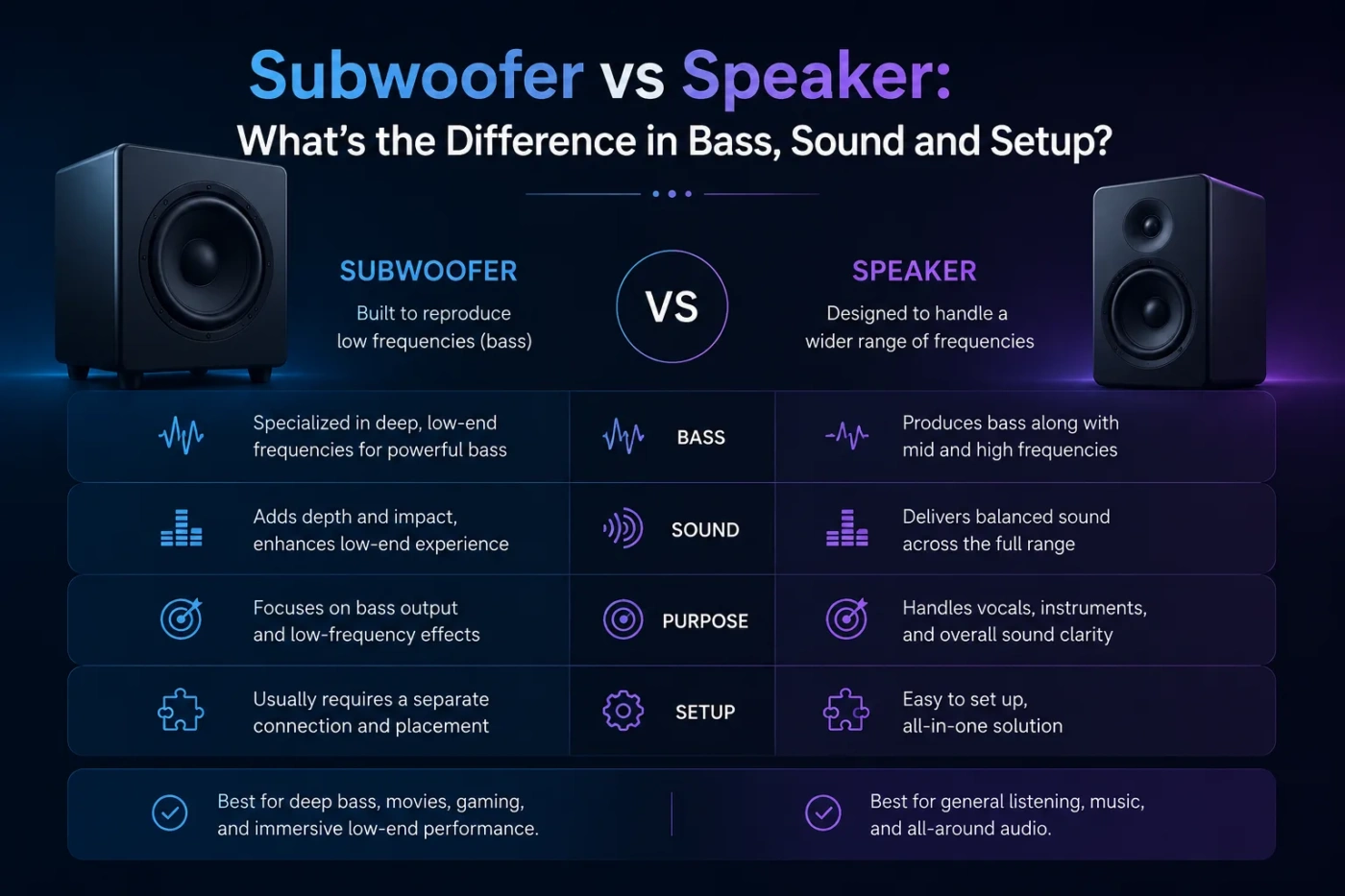
A subwoofer and a speaker are not direct replacements for each other. A speaker handles most of what you hear, including voices, instruments, dialogue, and everyday audio detail. A subwoofer focuses on low bass, the deep rumble and impact that regular speakers often cannot reproduce with the same depth. Choose speakers first if you need a complete sound system; add a subwoofer when you want deeper bass, stronger movie effects, or fuller music playback.
- Main Differences
- How They Work Together
- What A Subwoofer Offers
- What A Speaker Offers
- Choose A Subwoofer If
- Choose Speakers If
- Sound Quality And Real Use
- Setup And Compatibility
- Score And Fit
- Decision Path
- Cost And Long-Term Value
- Common Misunderstandings
- A Subwoofer Is Not Just A Louder Speaker
- More Bass Does Not Always Mean Better Sound
- Small Speakers Can Still Sound Good
- A Subwoofer Needs Proper Placement
- Best Choice By User Type
- Useful Terms
- Compare More Options
- FAQ
- Can A Subwoofer Replace Speakers?
- Do I Need A Subwoofer For Music?
- Do I Need A Subwoofer For A Soundbar?
- Are Bigger Speakers Better Than A Subwoofer?
- What Should I Buy First?
| Feature | Subwoofer | Speaker |
|---|---|---|
| Main Purpose | Reproduces deep bass and low-frequency effects | Reproduces voices, instruments, dialogue, and general sound |
| Frequency Focus | Low frequencies, often bass below the range of normal speakers | Midrange, treble, and sometimes moderate bass |
| Best For | Movies, gaming, bass-heavy music, home theater impact | Music, podcasts, TV dialogue, daily listening, stereo sound |
| Can It Work Alone? | Usually no; it needs speakers for the rest of the sound | Yes; most speakers can play complete audio by themselves |
| Sound Direction | Less directional because deep bass is harder to locate by ear | More directional, especially for vocals and stereo imaging |
| Setup Needs | Needs placement, crossover, volume, and phase adjustment | Needs correct positioning, connection, and basic level matching |
| Space Impact | Often larger and floor-placed | Available in bookshelf, floorstanding, soundbar, portable, and in-wall forms |
| Best First Purchase | Only if you already own speakers | Usually the better starting point |
Main Differences
A speaker is the main audio device in a system. It turns electrical audio signals into sound across a wide range of frequencies. A normal speaker may include a tweeter for high notes, a midrange driver for voices, and sometimes a woofer for lower tones.
A subwoofer is a specialized speaker built for bass. It does not handle most vocals, guitar detail, piano brightness, or dialogue clarity. Instead, it fills in the lower end of the sound, such as explosions in movies, kick drums, bass guitar, electronic music drops, and low cinematic effects.
How They Work Together
What A Subwoofer Offers
A subwoofer is built to move more air at low frequencies. That is why it often uses a larger driver, a reinforced cabinet, and a dedicated amplifier in powered models. The result is bass you can feel as well as hear.
In a home theater, a subwoofer makes action scenes, thunder, engines, and low effects feel more dramatic. In music, it can add fullness to drums, bass lines, and electronic tracks. In gaming, it can make explosions and environmental effects feel more immersive.
What A Speaker Offers
A speaker is responsible for the parts of sound people notice first: voices, lyrics, dialogue, melody, instruments, and stereo placement. Even speakers with limited bass can still deliver a complete listening experience because they cover the range where most detail lives.
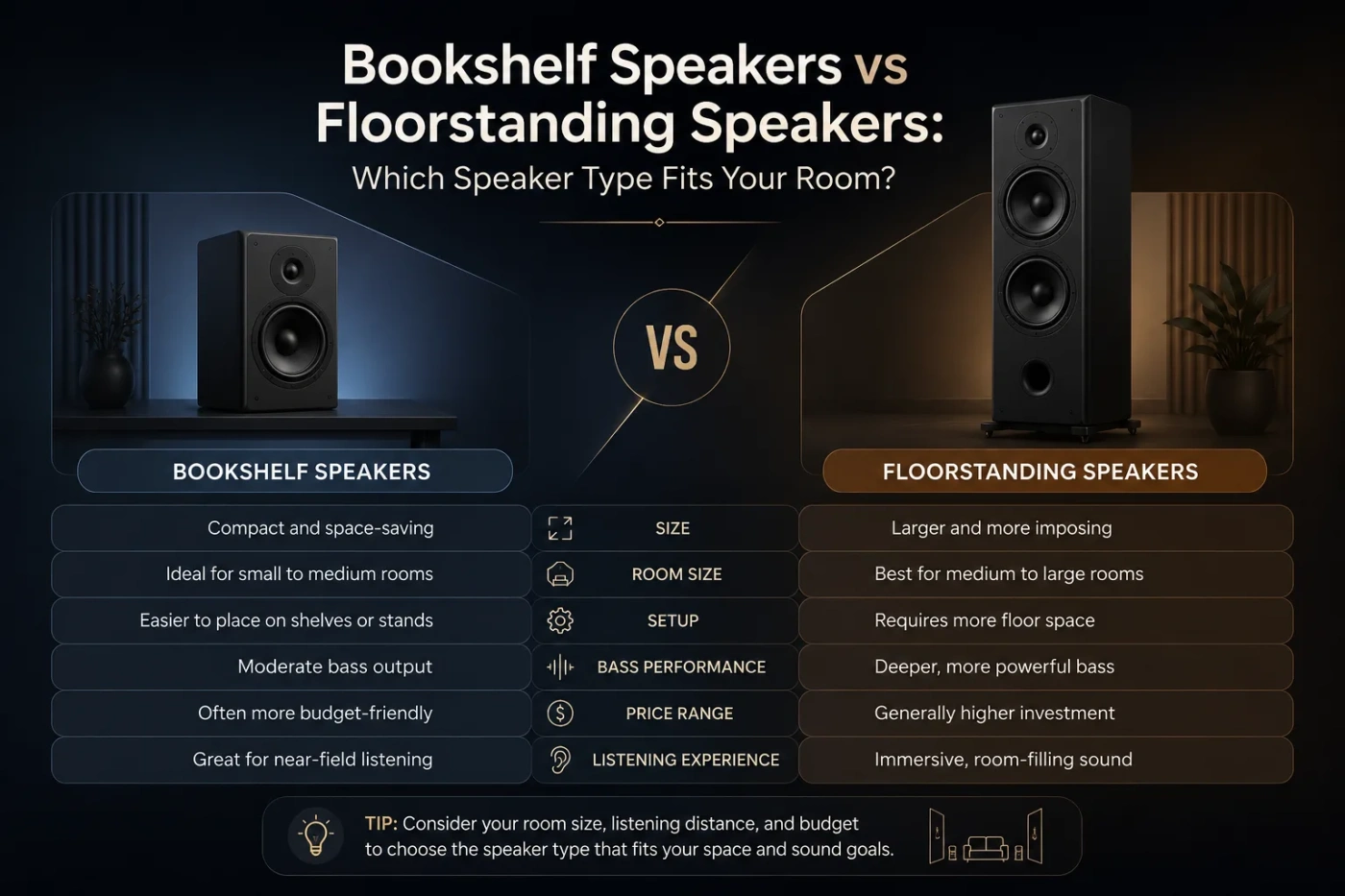
Speakers come in many forms, including bookshelf speakers, floorstanding speakers, center-channel speakers, studio monitors, portable Bluetooth speakers, and soundbars. Some are passive and need an amplifier. Others are powered and have amplification built in.
Choose A Subwoofer If
Choose Speakers If
Sound Quality And Real Use
The biggest real-use difference is where each device improves the listening experience. Speakers improve clarity, tone, imaging, and detail. A subwoofer improves depth, weight, and physical bass impact.
For music, speakers matter more for vocals, guitars, piano, strings, cymbals, and stereo separation. A subwoofer matters more for kick drum, bass guitar, synth bass, and the lower body of the recording.
For movies, speakers make dialogue clear and place effects around the room. A subwoofer adds the low rumble that makes scenes feel larger. In a surround system, the center speaker often matters more for speech, while the subwoofer matters more for impact.
Setup And Compatibility
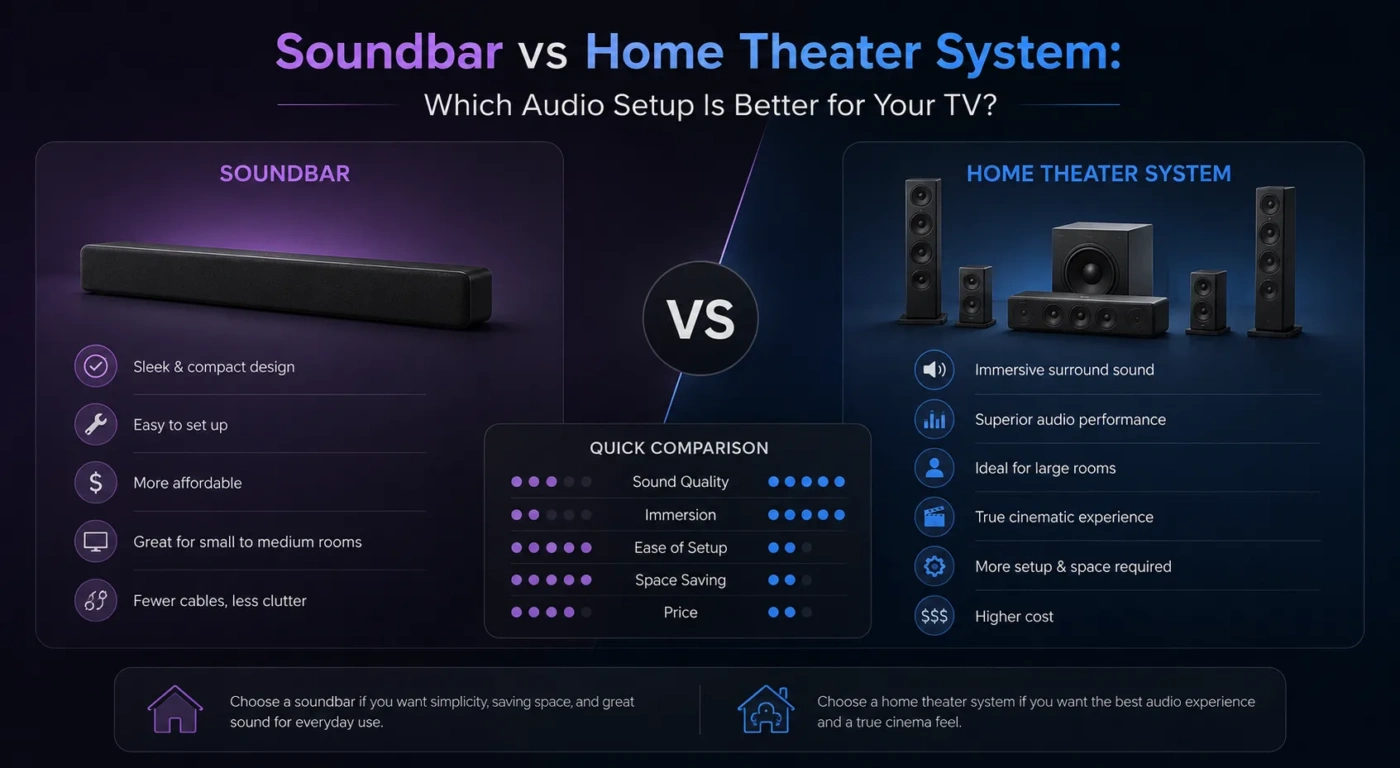
Speakers are usually easier to understand, but they still need the right match. Passive speakers need an amplifier or AV receiver. Powered speakers connect more directly to a source. Bluetooth speakers and soundbars simplify the setup, but they offer less flexibility than a separate speaker system.
Subwoofers add a second layer of setup. A powered subwoofer often connects through an LFE, sub out, RCA, speaker-level, or wireless connection depending on the system. After connection, the crossover, volume, and phase controls should be adjusted so the bass blends instead of overpowering the speakers.
Score And Fit
Decision Path
Cost And Long-Term Value
Speakers usually deliver more value as a first purchase because they cover more listening needs. Even a simple pair of decent speakers can handle music, TV, podcasts, and computer audio without requiring a separate bass unit.
A subwoofer becomes better value when the rest of the system is already in place. If your speakers are small, a subwoofer can extend the system without replacing everything. If your speakers are already large and bass-capable, the upgrade may be less urgent unless you want stronger low-frequency effects.
Common Misunderstandings
A Subwoofer Is Not Just A Louder Speaker
It is a specialized speaker for low frequencies. It is not designed to reproduce the full range of audio on its own.
More Bass Does Not Always Mean Better Sound
Too much bass can cover vocals and instruments. Balanced bass should support the sound, not dominate it.
Small Speakers Can Still Sound Good
Small speakers may lack deep bass, but they can still provide clear vocals, clean detail, and strong stereo imaging.
A Subwoofer Needs Proper Placement
Room corners can boost bass, but they can also make it boomy. Placement and adjustment matter as much as power.
Best Choice By User Type
| User Type | Better Choice | Reason |
|---|---|---|
| First-Time Buyer | Speaker | It covers the full listening experience better than a subwoofer alone. |
| Movie Fan | Subwoofer Added To Speakers | Low-frequency effects make home theater sound more cinematic. |
| Music Listener | Speakers First, Subwoofer Optional | Good speakers matter most for tone and detail; a subwoofer helps when deeper bass is wanted. |
| Gamer | Both If Space Allows | Speakers help positioning and detail, while a subwoofer adds impact. |
| Apartment User | Speaker | Speakers are easier to control at lower volume and may be more neighbor-friendly. |
| Bass Lover | Subwoofer | A dedicated bass unit gives more low-end depth than most small speakers. |
Useful Terms
Compare More Options
FAQ
Can A Subwoofer Replace Speakers?
No. A subwoofer handles bass, not the full range of sound. You still need speakers for voices, detail, and most music information.
Do I Need A Subwoofer For Music?
Not always. Many people enjoy music with speakers alone. A subwoofer helps most when the speakers lack deep bass or when the music relies heavily on low-end energy.
Do I Need A Subwoofer For A Soundbar?
It depends on the soundbar. Some soundbars include strong built-in bass for casual use, but a separate subwoofer usually gives deeper and more physical bass.
Are Bigger Speakers Better Than A Subwoofer?
Bigger speakers can produce more bass than small speakers, but a dedicated subwoofer often reaches deeper. The better choice depends on room size, listening volume, and the type of sound you want.
What Should I Buy First?
Buy speakers first if you do not already have them. Add a subwoofer later if you want deeper bass, stronger home theater effects, or more low-end weight.