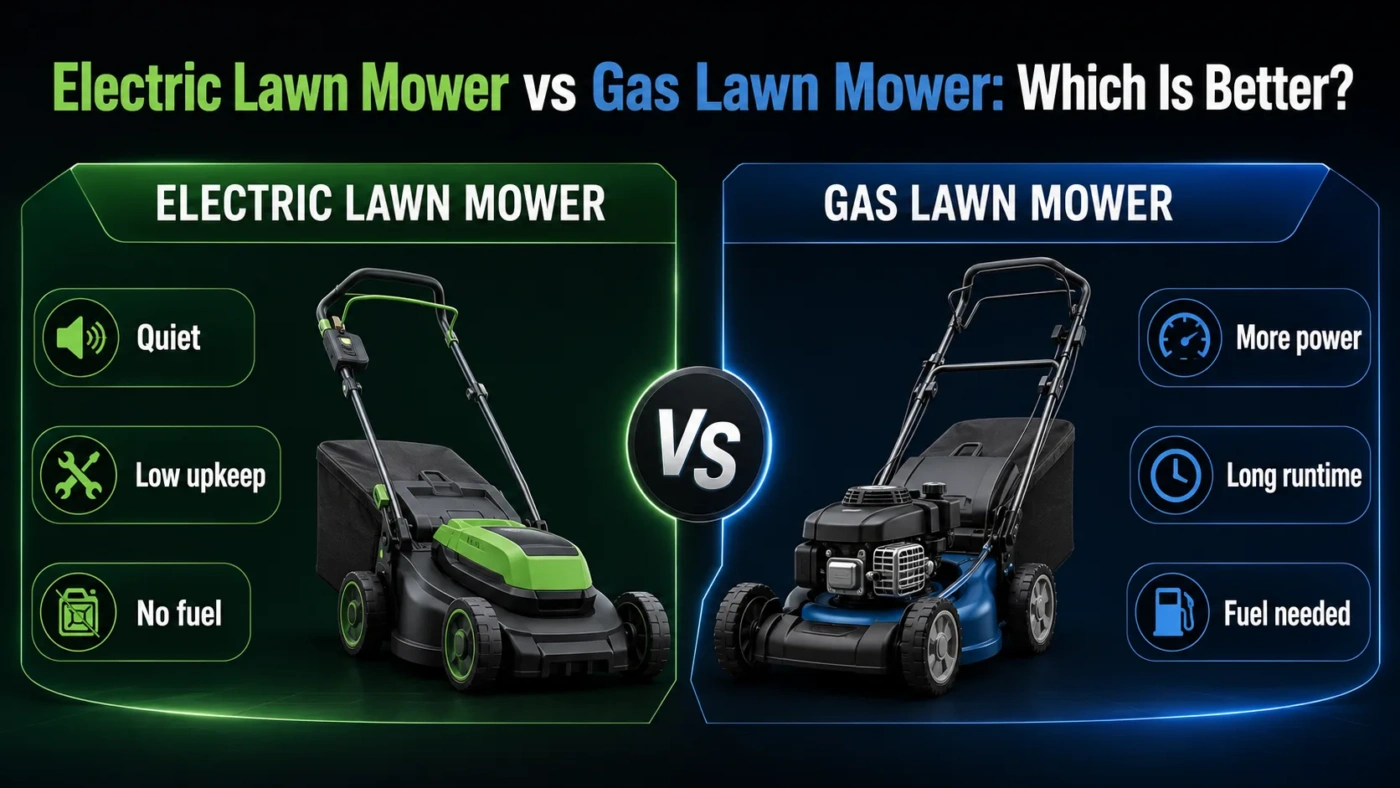
Electric lawn mowers are usually the better choice for small to medium lawns, quiet neighborhoods, simple maintenance, and owners who want a cleaner mowing routine. Gas lawn mowers still make sense for larger yards, thick grass, long cutting sessions, and users who do not want to plan around battery runtime or charging. The better option depends less on the mower label and more on your lawn size, grass conditions, storage space, and how often you mow.
- Main Differences
- Where Each Mower Fits Best
- Electric Lawn Mower Basics
- Gas Lawn Mower Basics
- Score Card For Everyday Use
- Price And Long-Term Value
- Power, Runtime, And Grass Conditions
- Noise, Storage, And Comfort
- Maintenance And Repair
- Decision Tree
- Choose An Electric Lawn Mower If
- Choose A Gas Lawn Mower If
- Common Misunderstandings
- Electric Mowers Are Not Only For Tiny Lawns
- Gas Mowers Are Not Always The Better Value
- Battery Runtime Is Not A Fixed Number
- More Power Is Not Always More Useful
- Best Choice By User Type
- Simple Buying Checklist
- Before Buying Electric
- Before Buying Gas
- FAQ
- Is An Electric Lawn Mower Better Than A Gas Lawn Mower?
- Can An Electric Lawn Mower Cut Thick Grass?
- Do Gas Lawn Mowers Last Longer?
- Is A Battery Mower Worth It For A Large Lawn?
- Which Mower Is Easier To Maintain?
- Compare More Options
| Feature | Electric Lawn Mower | Gas Lawn Mower |
|---|---|---|
| Best Fit | Small to medium lawns, regular mowing, quiet use | Large lawns, dense grass, longer mowing sessions |
| Power Source | Battery or corded electricity | Gasoline engine |
| Runtime | Limited by battery charge or cord reach | Limited by fuel in the tank |
| Noise | Usually quieter | Usually louder |
| Maintenance | Lower maintenance; blade care, cleaning, battery care | More maintenance; oil, spark plug, filter, fuel care, blade care |
| Cutting Strength | Good for normal grass; stronger models handle tougher lawns | Strong in thick, tall, or uneven grass |
| Storage | Often easier to store; no fuel smell | Needs fuel-safe storage and engine care |
| Upfront Cost | Can cost more if batteries and charger are included | Often lower for basic walk-behind models |
| Long-Term Cost | Lower fuel and maintenance costs, but battery replacement matters | Fuel, oil, filters, and tune-ups add cost over time |
| Best Overall For | Easy weekly mowing and lower noise | Maximum endurance and heavy cutting |
Main Differences
The biggest difference is how each mower delivers cutting force. An electric lawn mower uses an electric motor powered by a battery or cord. A gas lawn mower uses a small combustion engine that burns fuel to spin the blade.
That difference affects almost everything: noise, starting method, storage, maintenance, runtime, weight, smell, repair needs, and how the mower feels in thick grass. Electric models are easier to live with for routine yard care. Gas models are more forgiving when the lawn is large, overgrown, damp, or uneven.
Where Each Mower Fits Best
Electric Lawn Mower Basics
An electric lawn mower is powered by either a rechargeable battery or an electrical cord. Battery-powered models are the most common choice for homeowners because they avoid cord management and feel closer to a normal walk-behind mower. Corded models can be affordable, but they are best for very small lawns with easy outlet access.
The main appeal is convenience. Many electric mowers start with a button or lever, need no gasoline, produce no exhaust at the mower, and usually require less routine service. For a homeowner who mows on schedule and does not let the grass get too high, that simplicity can matter more than raw cutting force.
The tradeoff is energy storage. A battery mower can only mow as long as the battery lasts. If the yard is larger than the battery can handle, the job may require a second battery, a pause for charging, or a higher-capacity mower. Battery age also matters because battery performance can decline over time.
Gas Lawn Mower Basics
A gas lawn mower uses a gasoline engine. It is familiar, widely available, and strong enough for many demanding lawn conditions. If the grass is thick, the yard is large, or mowing often takes longer than expected, a gas mower can keep going as long as fuel is available.
The tradeoff is upkeep. Gas mowers need fuel management, oil checks, air filter care, spark plug replacement, seasonal storage steps, and more cleaning around the engine. They are also louder and produce exhaust during use.
For owners who are comfortable with engine maintenance, a gas mower can be dependable and practical. For owners who want the lowest-effort routine, the extra care can feel like the main downside.
Score Card For Everyday Use
Price And Long-Term Value
Basic gas mowers can be cheaper upfront than many battery-powered electric mowers, especially when an electric model includes a battery and charger. That first purchase price does not tell the whole story.
Electric mowers usually cost less to run because they do not need gasoline, oil changes, spark plugs, or air filters. The main long-term cost is battery replacement. A battery can last for years when stored and charged properly, but it is still a wear item.
Gas mowers may cost less at purchase, but fuel and maintenance add up. They can also need more seasonal attention if they sit unused for long periods. If you already maintain other gas yard tools, the routine may not bother you. If you want fewer tasks before mowing, electric has a clear comfort advantage.
Power, Runtime, And Grass Conditions
Gas mowers usually feel stronger in poor mowing conditions. Tall grass, damp grass, uneven ground, and thick seasonal growth can slow any mower, but gas models often have more endurance for that type of work.
Electric mowers are much better than older battery yard tools, but runtime still depends on battery size, mower design, grass height, cutting height, bagging, mulching, slope, and walking speed. A mower that handles a short dry lawn easily may drain faster when the grass is thick.
If your lawn is cut every week, electric can feel smooth and effortless. If you often miss mowing cycles and return to tall grass, gas gives more margin for rough days.
Noise, Storage, And Comfort
Electric mowers are usually quieter. That makes them easier to use in tight neighborhoods and less tiring during a full mowing session. They also avoid fuel smell, exhaust at the mower, and the need to store gasoline.
Gas mowers are louder and more mechanical in daily use. Pull-start models can also be harder for some users, although starting systems vary. The added vibration and engine noise may not matter for a short lawn, but they can become tiring on larger properties.
Weight depends on the model. Some electric mowers are light and easy to maneuver, while self-propelled battery models can be heavier because of the battery pack. Gas mowers also vary by deck material, engine size, and drive system.
Maintenance And Repair
Electric mower maintenance is mostly about the blade, underside cleaning, battery care, charger storage, and keeping vents clear. There is no gasoline engine oil to change and no spark plug routine.
Gas mower maintenance includes blade sharpening, oil, fuel, air filter, spark plug, carburetor care, and winter storage. A well-maintained gas mower can last a long time, but ignored fuel and dirty filters can cause starting problems.
Repair comfort also matters. Some people prefer the familiar service path of gas engines. Others prefer the lower routine service of electric mowers, even if battery or electronic repairs can be less DIY-friendly.
Decision Tree
Choose An Electric Lawn Mower If
Choose an electric lawn mower if your lawn is manageable in one battery session and you want a mower that is easy to start, easy to store, and easier to maintain. Electric is especially good for homeowners who mow regularly rather than waiting until the grass is very tall.
- You have a small or medium lawn.
- You prefer lower noise during mowing.
- You do not want to store gasoline.
- You want fewer engine maintenance tasks.
- You have limited storage space.
- You already use battery yard tools with compatible batteries.
- You value easy push-button starting.
Choose A Gas Lawn Mower If
Choose a gas lawn mower if your lawn is large, uneven, thick, or unpredictable. Gas is also a good choice if you need long mowing sessions without waiting for batteries to recharge.
- You have a large lawn or a long mowing route.
- Your grass often gets tall between cuts.
- You mow rougher areas or thicker turf.
- You want fast refueling instead of charging.
- You are comfortable with engine maintenance.
- You need strong performance across changing conditions.
- You prefer a familiar repair and service setup.
Common Misunderstandings
Electric Mowers Are Not Only For Tiny Lawns
Modern battery mowers can handle many normal residential lawns. The real question is whether the mower, battery capacity, and cutting deck match your yard size and grass conditions.
Gas Mowers Are Not Always The Better Value
A gas mower may cost less upfront, but fuel and maintenance matter over time. For some owners, electric becomes the better value because it reduces routine service and fuel needs.
Battery Runtime Is Not A Fixed Number
Runtime changes with grass height, moisture, slope, bagging, mulching, and cutting height. A battery that lasts long on short dry grass may drain faster in heavy spring growth.
More Power Is Not Always More Useful
If your lawn is flat, small, and cut often, extra engine strength may not improve the mowing experience. Convenience, storage, and noise may matter more.
Best Choice By User Type
| User Type | Better Fit | Reason |
|---|---|---|
| First-Time Homeowner | Electric | Simpler starting, storage, and maintenance. |
| Large Yard Owner | Gas | Better endurance for long sessions. |
| Quiet Neighborhood User | Electric | Lower operating noise is easier to live with. |
| Budget Buyer | Depends | Gas may cost less upfront; electric may save on routine running costs. |
| Heavy Grass User | Gas | Stronger fit for tall or dense grass. |
| Low-Maintenance User | Electric | Fewer engine-related tasks. |
Simple Buying Checklist
Before Buying Electric
- Check whether one battery can cover your lawn.
- Look at charging time and battery replacement cost.
- Consider a second battery for medium or larger lawns.
- Make sure the cutting deck width fits your yard size.
- Store the battery away from extreme heat or cold when possible.
Before Buying Gas
- Check engine maintenance needs.
- Plan safe fuel storage.
- Consider noise if houses are close together.
- Look at starting method and mower weight.
- Expect seasonal service if the mower sits unused.
FAQ
Is An Electric Lawn Mower Better Than A Gas Lawn Mower?
An electric lawn mower is better for many homeowners with small to medium lawns because it is quieter, easier to start, and needs less routine maintenance. A gas mower is better for large lawns, heavy grass, and long mowing sessions.
Can An Electric Lawn Mower Cut Thick Grass?
Yes, many electric mowers can cut thick grass, especially higher-voltage or self-propelled models. Still, thick or damp grass drains batteries faster and may require slower mowing, a higher cutting height, or a second pass.
Do Gas Lawn Mowers Last Longer?
A gas mower can last many years with proper maintenance. Electric mowers can also last well, but battery life and replacement cost should be part of the decision.
Is A Battery Mower Worth It For A Large Lawn?
It can be worth it if the mower has enough battery capacity and you are willing to buy extra batteries if needed. For very large lawns, gas may still be more practical because refueling is faster.
Which Mower Is Easier To Maintain?
Electric mowers are easier to maintain for most owners. They still need blade care and cleaning, but they avoid fuel, oil, spark plugs, and air filters.
Compare More Options
If your yard is small to medium and you mow regularly, choose an electric lawn mower for the easier daily experience. If your yard is large, the grass gets tough, or you need long runtime without charging breaks, choose a gas lawn mower. For most typical homeowners, electric is the cleaner and simpler pick; for demanding lawn work, gas still has the edge.