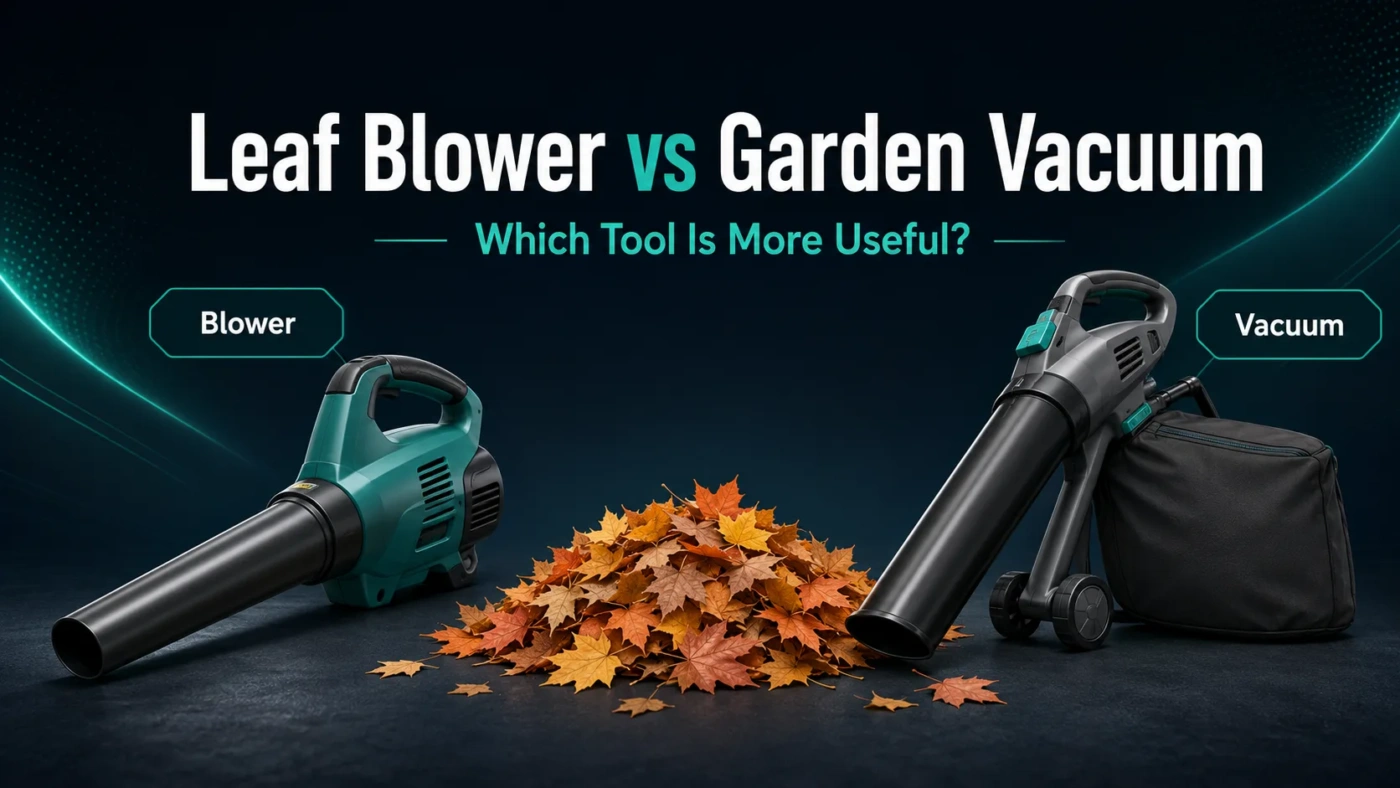
Leaf blowers and garden vacuums solve the same seasonal problem from opposite directions: one moves garden debris away, while the other collects it into a bag. If the main job is clearing paths, patios, driveways, lawns, and large areas fast, a leaf blower is usually more useful. If the main job is collecting dry leaves from smaller areas with less raking and easier disposal, a garden vacuum can be the better fit.
- Main Differences
- What A Leaf Blower Does Better
- What A Garden Vacuum Does Better
- Speed And Everyday Cleaning
- Comfort And Handling
- Leaf Blower Vs Garden Vacuum For Different Surfaces
- Choose A Leaf Blower If
- Choose A Garden Vacuum If
- Decision Path
- Maintenance And Long-Term Use
- Price And Value
- Common Misunderstandings
- A Garden Vacuum Is Not Always Better Because It Collects Leaves
- A Leaf Blower Does Not Remove The Disposal Step
- Wet Leaves Change The Decision
- More Power Is Not Always More Useful
- Best Choice By User Type
- Where A Combination Tool Fits
- Compare More Options
- FAQ
- Is A Leaf Blower Better Than A Garden Vacuum?
- Can A Garden Vacuum Pick Up Wet Leaves?
- Do Leaf Blowers Work On Grass?
- Is A Garden Vacuum Worth It For A Large Yard?
- Which Tool Is More Useful Overall?
| Feature | Leaf Blower | Garden Vacuum |
|---|---|---|
| Main Purpose | Pushes leaves, grass clippings, dust, and light debris into piles or away from surfaces | Sucks dry leaves and small garden debris into a collection bag |
| Best For | Large areas, fast clearing, lawns, driveways, patios, and walkways | Small to medium gardens, tidy collection, dry leaves, and disposal preparation |
| Speed | Usually faster for clearing open areas | Slower because the bag fills and needs emptying |
| Collection | Does not collect debris by itself | Collects debris directly into a bag |
| Wet Leaves | Can move some damp leaves, depending on air power | Often struggles with wet, heavy, or compacted leaves |
| Noise And Dust | Can be louder and may stir up dust on dry surfaces | Can still be noisy, but usually creates less scattered dust |
| Ease Of Use | Simple: aim, sweep, and gather debris | Needs more attention to bag capacity, clogging, and suction limits |
| Storage And Handling | Often lighter and easier to carry | Can feel bulkier because of the collection bag |
| Overall Usefulness | Better all-round garden clearing tool | Better cleanup tool when collection matters more than speed |
Main Differences
The main difference is movement versus collection. A leaf blower is designed to move debris quickly. It clears a surface by pushing leaves and clippings where the user wants them to go. A garden vacuum is designed to pick up debris, usually through a suction tube and into a bag.
This changes the way each tool feels in real use. With a blower, the work is faster but less contained. Leaves still need to be piled, bagged, composted, or moved elsewhere. With a garden vacuum, the collection happens during the job, but the work takes longer because suction is slower than blowing and the bag needs emptying.
What A Leaf Blower Does Better
A leaf blower is better when the job is about clearing space. It can move dry leaves, grass clippings, loose dirt, sawdust, light hedge trimmings, and other surface debris without direct contact. That makes it useful beyond autumn leaf cleanup.
For driveways, sidewalks, decks, patios, garden paths, artificial grass, and garage entrances, a blower can finish the first stage of cleanup quickly. It is also useful after mowing, trimming, or sweeping because it can gather scattered debris into one area.
The main weakness is that a blower does not remove leaves by itself. It changes where the mess is. For some people, that is enough. For others, it means a second job with a rake, bin, tarp, compost pile, or collection bag.
What A Garden Vacuum Does Better
A garden vacuum is better when collection is the priority. It pulls leaves through a tube and stores them in a bag, so the user can empty the contents into a garden waste bin, compost area, or leaf mold pile.
Many garden vacuums also shred leaves as they pass through the machine. This can reduce volume and make the collected material easier to manage. It is especially helpful when dry leaves take up too much space in bags or bins.
The trade-off is speed. Garden vacuums are usually slower than blowers, especially when leaves are wet, mixed with twigs, or packed into corners. Suction tubes can clog, collection bags can become heavy, and the tool may need more pauses during a long cleanup session.
Speed And Everyday Cleaning
For everyday outdoor cleaning, a leaf blower usually wins. It can clear a patio after trimming, push grass clippings away from a path, and move leaves from a driveway in minutes. The user can work in sweeping motions without stopping often.
A garden vacuum is more controlled, but that control comes with pauses. The bag fills, the tube may need checking, and suction works best when the user moves slowly over the debris. For a small paved area, this is fine. For a large lawn under several trees, it can become tiring.
If the question is “Which tool gets the area looking clear faster?”, the answer is usually the leaf blower. If the question is “Which tool collects dry leaves with less separate raking?”, the garden vacuum has the advantage.
Comfort And Handling
Leaf blowers are often easier to handle because they do not carry collected debris. The tool may still feel heavy depending on its power source and design, but its weight usually stays consistent during the job.
Garden vacuums change as they work. The collection bag gets heavier, and the balance of the tool can shift. This matters for longer sessions, older users, and anyone who prefers lighter equipment. Shoulder straps can help, but they do not remove the extra weight of the filled bag.
For users who want the least physical interruption, a blower is usually more comfortable. For users who prefer a slower but more contained cleanup, a garden vacuum can feel more organized.
Leaf Blower Vs Garden Vacuum For Different Surfaces
| Surface Or Area | Better Fit | Reason |
|---|---|---|
| Large Lawn | Leaf Blower | Moves leaves into piles faster than vacuuming the whole area. |
| Small Patio | Garden Vacuum | Can collect dry leaves without blowing them into corners. |
| Driveway | Leaf Blower | Clears loose leaves and dust quickly over a hard surface. |
| Gravel Area | Leaf Blower | Vacuum suction may pick up small stones or clog more easily. |
| Flower Beds | Depends | A gentle blower can move leaves, while a vacuum may disturb mulch or small plants. |
| Tight Corners | Garden Vacuum | Can collect debris directly when blowing would scatter it. |
Choose A Leaf Blower If
- You have a medium or large garden with many leaves to move.
- You clear driveways, paths, patios, decks, or lawns often.
- You want the fastest way to gather debris into piles.
- You already have a way to bag, compost, or move the leaves afterward.
- You deal with mixed outdoor debris, not only dry leaves.
- You prefer a tool that stays lighter during the job.
A leaf blower is the better choice for most users who want one outdoor cleanup tool. It is more flexible, faster across open areas, and useful in more seasons than a garden vacuum.
Choose A Garden Vacuum If
- You mainly collect dry leaves from a small or medium garden.
- You want leaves to go straight into a bag.
- You do not want to chase piles around a patio or tight space.
- You prefer slower cleanup with more control.
- You have limited space for loose leaf piles.
- You want shredded leaves for composting or easier disposal.
A garden vacuum makes sense when collection is the real problem. It is not usually the fastest outdoor cleanup tool, but it can make leaf disposal feel simpler when the debris is dry and manageable.
Decision Path
Maintenance And Long-Term Use
Leaf blowers are usually simpler to maintain because they do not move debris through an internal collection path. The main care tasks are keeping air intakes clear, storing the tool properly, and checking the power system before use.
Garden vacuums need more cleaning because leaves pass through the tube, fan area, and bag. Damp leaves can stick inside. Small twigs can block the tube. The bag may need drying before storage to prevent smells and material wear.
For long-term ease, the leaf blower is usually simpler. For users who value collected output more than low-maintenance handling, the garden vacuum can still be worth the extra care.
Price And Value
Prices vary by power source, build quality, air performance, battery size, bag capacity, and whether the tool offers blower and vacuum modes. In general, a basic leaf blower can be easier to buy at a lower entry cost, while blower-vacuum tools may cost more because they include extra parts and collection features.
The best value depends on what would otherwise take the most time. If clearing surfaces is the frequent job, a blower gives stronger value. If bagging dry leaves is the frequent job, a garden vacuum may save more effort even if it works more slowly.
Common Misunderstandings
A Garden Vacuum Is Not Always Better Because It Collects Leaves
Collection sounds more complete, but it is not always easier. A vacuum can be slow on large lawns and may need frequent emptying. For big jobs, blowing leaves into a pile first can be more practical.
A Leaf Blower Does Not Remove The Disposal Step
A blower clears the surface, but the leaves still need somewhere to go. If disposal is the hardest part of the job, a blower alone may feel unfinished.
Wet Leaves Change The Decision
Wet leaves are heavier and harder to move or collect. A strong blower may push some damp leaves into piles, while many garden vacuums work better when the material is dry.
More Power Is Not Always More Useful
Too much air force can scatter leaves, move mulch, or create dust. For small gardens, control can matter more than maximum output.
Best Choice By User Type
Where A Combination Tool Fits
A blower-vacuum combination tool can be a smart compromise for small gardens. It lets the user blow leaves into a pile and then switch to vacuum mode for collection. This can reduce the need for two separate tools.
The trade-off is that combination tools may feel less specialized. The blower mode may not feel as fast as a dedicated blower, and the vacuum mode still has the usual limits: dry leaves work best, bags fill, and clogs can happen.
For a small property, a combination tool can make sense. For larger gardens or frequent clearing, a dedicated leaf blower is usually the stronger first purchase.
Compare More Options
FAQ
Is A Leaf Blower Better Than A Garden Vacuum?
A leaf blower is better for most general outdoor clearing because it is faster and more flexible. A garden vacuum is better when the main goal is collecting dry leaves directly into a bag.
Can A Garden Vacuum Pick Up Wet Leaves?
Some garden vacuums can pick up slightly damp leaves, but wet leaves are harder to collect and can clog the tube or make the bag heavy. Dry leaves are much easier to vacuum.
Do Leaf Blowers Work On Grass?
Yes, leaf blowers can move leaves across grass, especially when the leaves are dry and loose. Thick, wet, or flattened leaves may need raking or stronger airflow.
Is A Garden Vacuum Worth It For A Large Yard?
Usually not as the only tool. For a large yard, a leaf blower is often more practical for gathering leaves first. A garden vacuum can still help with smaller piles or final collection.
Which Tool Is More Useful Overall?
A leaf blower is more useful overall for most homes because it handles more outdoor cleanup tasks. A garden vacuum is more useful for users who care most about collecting dry leaves neatly.