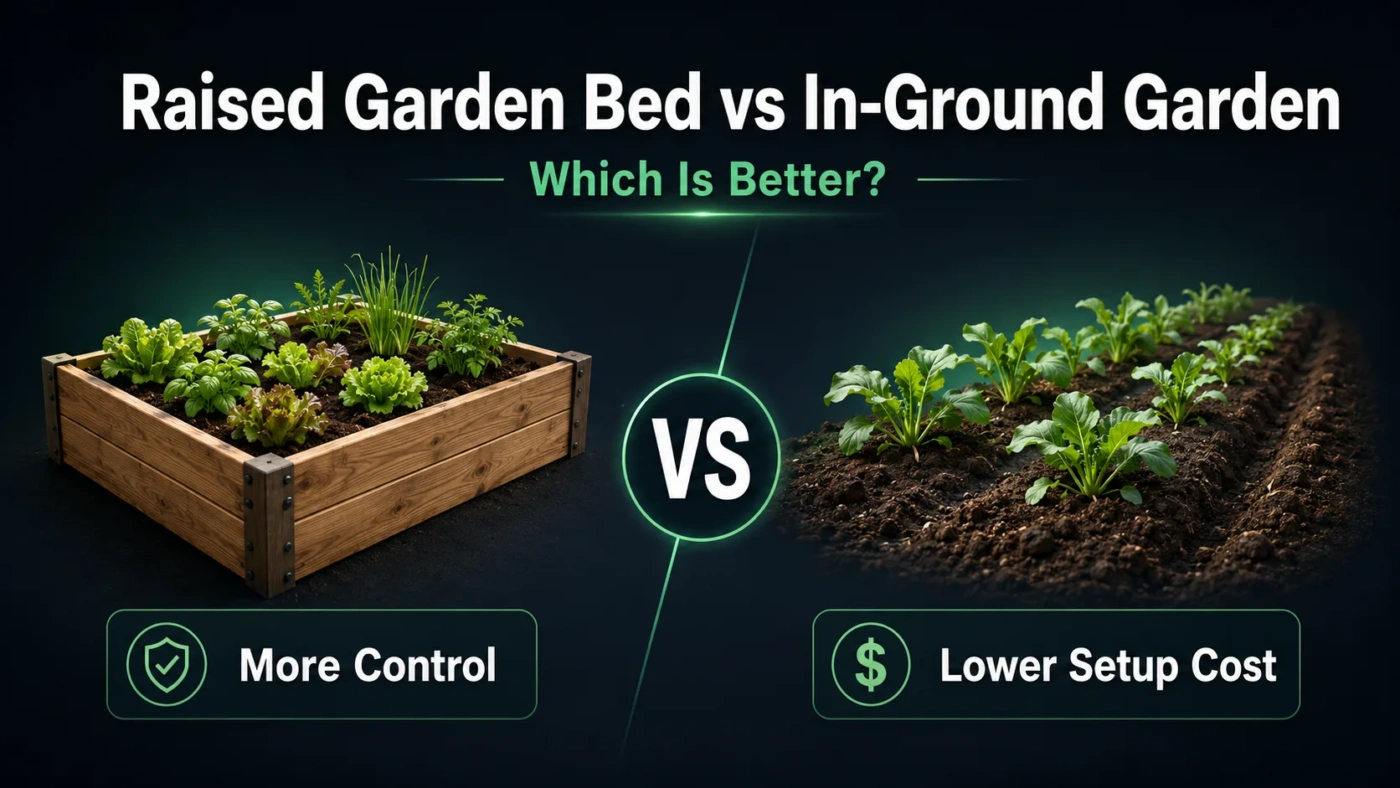
Raised garden beds are usually the better choice if you want easier soil control, cleaner planting zones, improved drainage, and less bending. An in-ground garden is usually better if you have decent native soil, want the lowest setup cost, need a large growing area, or prefer a more natural layout. The right choice depends less on which method is “better” and more on your soil, space, budget, mobility, and what you plan to grow.
- Main Differences
- What A Raised Garden Bed Offers
- What An In-Ground Garden Offers
- Choose Raised Garden Beds If
- Choose An In-Ground Garden If
- Soil, Drainage, And Watering
- Cost And Long-Term Value
- Setup And Daily Use
- Decision Tree
- Common Misunderstandings
- Raised Beds Do Not Automatically Mean Better Plants
- In-Ground Gardens Are Not Always Messy
- Deeper Is Not Always Necessary
- Raised Beds Still Need Soil Care
- Best Choice By User Type
- Where Each Option Fits Best
- Raised Bed Strengths
- In-Ground Strengths
- Short Glossary
- FAQ
- Compare More Options
| Feature | Raised Garden Bed | In-Ground Garden |
|---|---|---|
| Best For | Small spaces, poor soil, neat layouts, easier access | Large areas, lower budgets, deep-rooted plants, natural soil use |
| Setup Cost | Usually higher because of bed materials and added soil mix | Usually lower if the existing soil is workable |
| Soil Control | High control over soil texture, fertility, and drainage | Depends on native soil quality and amendments |
| Drainage | Often drains faster and warms earlier | Can hold moisture better, but may become compacted or waterlogged |
| Watering Needs | May dry out faster, especially in hot weather | May need less frequent watering in good soil |
| Maintenance | Cleaner paths, fewer spreading weeds, easier bed access | More area to weed and manage, but no bed structure to maintain |
| Root Space | Good if the bed is deep enough and open to the ground | Often better for large, deep, or spreading root systems |
| Long-Term Value | Strong value for repeat planting in limited space | Strong value for larger gardens and lower yearly cost |
Main Differences
The main difference is control. A raised garden bed gives you a contained planting area where you decide the soil mix, bed depth, layout, and access height. That makes it easier to manage vegetables, herbs, flowers, and compact food gardens in a tidy way.
An in-ground garden uses the existing soil as the planting base. It can be very effective when the soil is loose, fertile, and drains well. It also scales better if you want a larger garden without buying bed materials or large amounts of imported soil.
What A Raised Garden Bed Offers
A raised garden bed is a framed or mounded planting area built above the surrounding ground. It may be made from untreated wood, metal, stone, blocks, or other garden-safe materials. Some beds are shallow and used for herbs or leafy greens. Others are deep enough for root vegetables, tomatoes, peppers, and mixed planting.
The biggest advantage is predictable soil. Instead of fighting compacted or rocky ground, you can fill the bed with a balanced mix that holds moisture but still drains. Raised beds also make crop rotation, spacing, mulching, and seasonal cleanup easier because the growing area is clearly defined.
What An In-Ground Garden Offers
An in-ground garden is planted directly into the yard soil after loosening, amending, and shaping the planting area. It can be a row garden, wide bed, cottage-style border, vegetable patch, or mixed edible landscape.
This approach works well when the soil has depth, good structure, and steady moisture. It also gives plants access to the wider soil ecosystem. For larger gardens, in-ground planting is often more practical because you are not limited by bed frames or the cost of filling many raised boxes.
Choose Raised Garden Beds If
Choose raised garden beds if your native soil is compacted, clay-heavy, rocky, contaminated, very sandy, or slow to drain. A raised bed lets you start with a cleaner growing medium instead of spending several seasons trying to correct difficult soil.
Raised beds also fit gardeners who want neat edges, easier harvesting, and simpler crop planning. They are especially useful for vegetables and herbs because the bed can be divided into clear zones. If you like a tidy garden that is easy to inspect, weed, and replant, raised beds make daily care feel more manageable.
- Choose raised beds for poor soil: They let you bring in a better soil mix from the start.
- Choose raised beds for access: Taller beds reduce bending and make the garden easier to reach.
- Choose raised beds for drainage: They help prevent roots from sitting in wet ground.
- Choose raised beds for small spaces: They make compact planting more organized and efficient.
Choose An In-Ground Garden If
Choose an in-ground garden if your soil is already workable or can be improved with compost, mulch, and regular care. It is usually the more budget-friendly option because you do not need to buy frames or fill each bed with a new soil blend.
In-ground gardening also makes sense when you want more space. Corn, squash, melons, potatoes, large perennials, and sprawling flowers often feel less restricted in open soil. If you enjoy a more natural garden layout and do not need raised edges, in-ground planting gives you flexibility without much construction.
- Choose in-ground planting for larger gardens: It scales more easily across wider areas.
- Choose in-ground planting for lower cost: You can invest in compost and mulch instead of bed materials.
- Choose in-ground planting for deep roots: Plants can explore a wider soil area when the soil is healthy.
- Choose in-ground planting for natural layouts: It works well for blended edible and ornamental gardens.
Soil, Drainage, And Watering
Raised beds give you more control over soil texture. This is helpful when the yard soil drains poorly or compacts after rain. A good raised bed mix usually includes mineral soil, compost, and materials that support air and water movement. The goal is not a fluffy potting mix alone, but a soil blend that holds nutrients and still allows roots to breathe.
The tradeoff is watering. Raised beds can dry faster because they sit above the ground and have more exposed edges. In hot weather, shallow raised beds may need frequent watering unless they are mulched well.
In-ground gardens often hold moisture longer, especially when soil has enough organic matter. That can reduce watering pressure. The risk is poor drainage. If water stays around roots for too long, many vegetables struggle. In that case, raised beds or raised mounds may be the more reliable choice.
Cost And Long-Term Value
An in-ground garden usually costs less to start if you already have basic tools and decent soil. You may need compost, mulch, soil testing, edging, or irrigation supplies, but the planting area itself does not require a built structure.
Raised beds can cost more upfront. The final cost depends on size, height, material, and how much soil mix is needed. Taller beds and large beds need more fill, so the first season can be more expensive. Over time, raised beds can still offer strong value because they make repeat planting, crop rotation, and maintenance easier.
If budget is tight, start with an in-ground garden or one small raised bed. A single raised bed near the kitchen can handle herbs, salad greens, and compact vegetables while the rest of the yard remains in-ground.
Setup And Daily Use
Raised beds require planning before planting. You need to choose the bed size, material, depth, location, and soil fill. A common mistake is making the bed too wide. If you cannot reach the center without stepping into the soil, the bed becomes harder to manage. Narrower beds with clear paths are more practical.
In-ground gardens need soil preparation. That may include removing grass, loosening compacted areas, adding compost, shaping beds or rows, and mulching paths. The work can be heavier at first, but the setup is simple if the soil is already in good condition.
Decision Tree
Common Misunderstandings
Raised Beds Do Not Automatically Mean Better Plants
A raised bed helps when it improves soil, drainage, spacing, and access. If it is filled with weak soil or allowed to dry out often, plants can struggle. The bed shape alone does not guarantee success.
In-Ground Gardens Are Not Always Messy
An in-ground garden can be clean and productive with defined paths, mulch, edging, and regular soil care. The difference is that the structure comes from layout and maintenance rather than a physical frame.
Deeper Is Not Always Necessary
Many vegetables can grow well in moderate bed depth if the bed is open to the soil below. Very shallow beds can limit roots, but extremely tall beds are not required for every crop.
Raised Beds Still Need Soil Care
Compost, mulch, crop rotation, and seasonal replenishment still matter. Raised bed soil can settle and lose nutrients over time, so it needs attention just like in-ground soil.
Best Choice By User Type
| User Type | Better Fit | Reason |
|---|---|---|
| Beginner Gardener | Raised Garden Bed | The defined space makes soil, spacing, and care easier to manage. |
| Budget Gardener | In-Ground Garden | You can start with existing soil and improve it gradually. |
| Small Yard Gardener | Raised Garden Bed | Compact beds help organize limited space. |
| Large Vegetable Grower | In-Ground Garden | Larger plots are easier to scale without many bed frames. |
| Gardener With Mobility Needs | Raised Garden Bed | Taller beds can reduce bending and make harvesting easier. |
| Perennial Flower Gardener | In-Ground Garden | Many perennial plants prefer wider root spread and natural soil depth. |
Where Each Option Fits Best
Raised beds fit best near the home, along sunny walkways, on compact lots, or in yards where soil quality is the main problem. They also work well when you want a repeatable planting system for lettuce, herbs, carrots, peppers, tomatoes, and seasonal greens.
In-ground gardens fit best in open sunny areas with enough room for paths and crop spacing. They are better for gardeners who want to expand, grow larger crops, or build long-term soil health directly in the yard.
Raised Bed Strengths
- Better control over soil mix
- Cleaner layout and easier crop planning
- Helpful for drainage problems
- Good for small spaces and frequent harvesting
In-Ground Strengths
- Lower setup cost in usable soil
- Easier to scale for larger gardens
- Good moisture retention with healthy soil
- More open space for spreading plants
Short Glossary
FAQ
Are raised garden beds better than in-ground gardens?
Raised beds are better for soil control, drainage, access, and neat planting areas. In-ground gardens are better for lower cost, larger spaces, and plants that need more room. Neither option wins for every garden.
Do raised garden beds need more water?
They often do, especially in hot or windy weather. Raised beds drain well and can dry faster than in-ground soil. Mulch, compost, and drip irrigation can help keep moisture more stable.
Can I grow the same vegetables in both?
Yes. Many vegetables can grow in either system. The main difference is how much soil depth, spacing, water, and care each crop needs. Compact crops fit raised beds well, while spreading crops may be easier in open ground.
Is an in-ground garden cheaper?
Usually yes, especially if the native soil is workable. You may still need compost, mulch, tools, and irrigation supplies, but you avoid the cost of bed frames and large volumes of imported soil mix.
Which is better for a first vegetable garden?
A raised bed is often easier for a first small vegetable garden because the area is contained and simple to manage. If you already have good soil and enough space, an in-ground garden can also be a practical first choice.
Compare More Options
If you want the easiest controlled start, choose a raised garden bed. If you want the lowest-cost path and have usable soil, choose an in-ground garden. For many homes, the strongest setup is a mix: raised beds for high-care vegetables and herbs, with in-ground areas for larger plants, flowers, and long-term soil building.