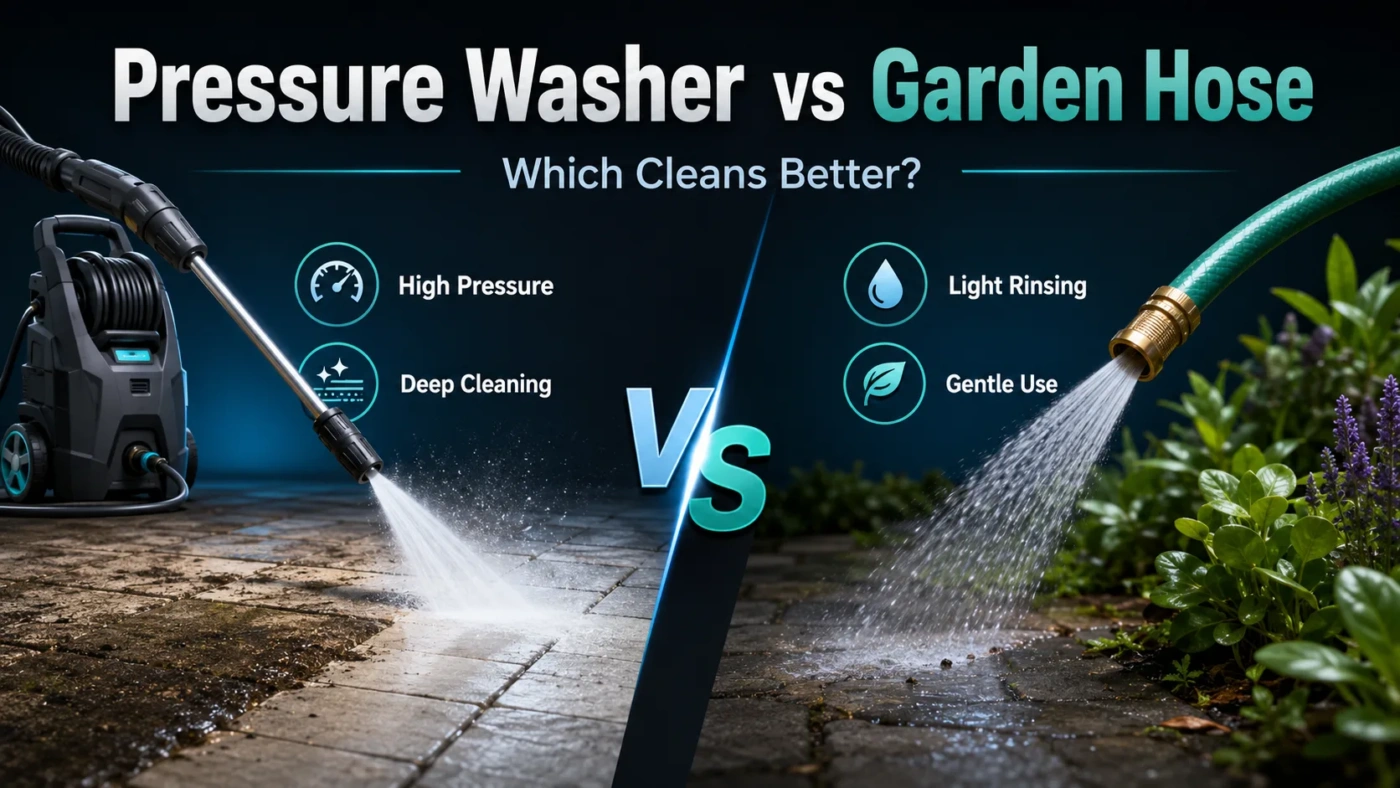
A pressure washer cleans better when dirt is stuck, layered, oily, or spread across hard outdoor surfaces. A garden hose cleans better when the job is light, delicate, frequent, or close to plants, paint, soft materials, and everyday outdoor mess. If you need force, choose a pressure washer. If you need gentle rinsing and simple upkeep, choose a garden hose.
- Main Differences
- What A Pressure Washer Offers
- What A Garden Hose Offers
- Choose A Pressure Washer If
- Choose A Garden Hose If
- Cleaning Results In Real Use
- Concrete, Pavers, And Stone
- Cars, Bikes, And Painted Items
- Decks And Wood Surfaces
- Outdoor Furniture And Bins
- Decision Tree
- Cost And Long-Term Value
- Common Misunderstandings
- More Pressure Does Not Always Mean Better Cleaning
- A Garden Hose Is Not Only For Watering
- A Pressure Washer Does Not Replace All Scrubbing
- Delicate Surfaces Need A Test Spot
- Best Choice By User Type
- Glossary
- FAQ
- Does A Pressure Washer Clean Better Than A Garden Hose?
- Can A Garden Hose Clean A Driveway?
- Can A Pressure Washer Damage Surfaces?
- Which One Uses Less Water?
- Should I Own Both?
- The Cleaner Choice For Your Situation
| Feature | Pressure Washer | Garden Hose |
|---|---|---|
| Cleaning Strength | High force for stuck dirt, grime, mildew, mud, and stained hard surfaces | Light rinsing for dust, loose soil, fresh spills, and watering tasks |
| Best Surfaces | Driveways, patios, stone paths, outdoor furniture, bins, some siding | Plants, windows, painted items, cars, light outdoor cleaning, everyday rinsing |
| Risk Of Damage | Higher if used too close or with the wrong nozzle | Lower, though strong spray nozzles can still affect delicate items |
| Ease Of Use | Needs setup, power or fuel, hose connection, nozzle choice, and care | Simple: connect, turn on, rinse |
| Water Use | Often uses less water per minute but cleans with much higher force | Often uses more water per minute, depending on flow and nozzle |
| Cleaning Speed | Faster on large hard surfaces with heavy dirt | Faster for small, light, low-risk rinsing |
| Maintenance | Needs storage care, hose checks, nozzle care, and pump protection | Needs basic storage, leak checks, and occasional nozzle replacement |
| Best Overall Use | Deep outdoor cleaning | Daily rinsing, watering, and gentle cleaning |
Main Differences
The main difference is force. A garden hose moves water with normal household pressure, while a pressure washer pushes water through a small nozzle at much higher pressure. That extra force is what removes packed dirt from concrete, textured stone, brick, and other outdoor surfaces.
A garden hose is not trying to scrape dirt away. It rinses, softens, and carries loose debris off the surface. That makes it safer for delicate materials, plants, painted finishes, screens, and light household cleaning. It also makes it easier to use without planning.
A pressure washer is more capable, but it is less forgiving. Used too close, it can strip paint, mark soft wood, push water behind siding, damage seals, or cut into soft materials. The cleaner choice depends on the surface, not only the amount of dirt.
What A Pressure Washer Offers
A pressure washer is designed for outdoor cleaning jobs where normal water flow is not enough. It uses a pump to raise water pressure and sends that water through a nozzle that shapes the spray. Wider spray patterns are gentler. Narrower spray patterns are more forceful and need more care.
Its biggest advantage is surface cleaning strength. On concrete, stone, brick, outdoor tiles, garbage bins, garden tools, and some exterior surfaces, a pressure washer can remove dirt that a hose would only wet. It can also reduce scrubbing when used with the right technique.
The trade-off is setup and control. You need to connect the water supply, attach the wand, choose the nozzle, manage the hose, test a small area, and keep a safe distance from the surface. It is not difficult, but it asks for attention.
What A Garden Hose Offers
A garden hose is the more flexible everyday tool. It waters plants, rinses dust off furniture, washes away fresh mud, fills buckets, cleans tools, cools outdoor areas, and handles many quick tasks without extra equipment.
With a spray nozzle, a hose can switch between mist, shower, jet, and flat spray patterns. It still will not match a pressure washer for stuck grime, but it gives enough control for light cleaning. For cars, painted objects, delicate garden items, and nearby plants, that gentler flow is often the safer choice.
A hose is also easier to store, cheaper to maintain, and less demanding for short jobs. If the surface is not deeply dirty, using a pressure washer may be more effort than the job needs.
Choose A Pressure Washer If
Choose A Garden Hose If
Cleaning Results In Real Use
Concrete, Pavers, And Stone
A pressure washer is the stronger choice for concrete, pavers, and stone paths because these surfaces collect dirt inside texture and pores. A hose can rinse the top layer, but it often leaves darker patches behind. For old stains or green buildup, pressure makes the difference.
Cars, Bikes, And Painted Items
A garden hose is usually the safer starting point for vehicles and painted items. It can rinse loose dirt without forcing water into seals, trim, bearings, or small gaps. A pressure washer can be used carefully on some items, but distance and nozzle choice matter.
Decks And Wood Surfaces
Wood needs caution. A pressure washer can clean weathered boards, but too much force can raise grain, leave lines, or damage softer areas. A hose with a brush is safer for routine cleaning. Pressure is better reserved for tougher cleaning when the surface can handle it.
Outdoor Furniture And Bins
Both tools can work here. A hose is enough for dust and pollen. A pressure washer helps with sticky grime, old mud, and textured plastic or metal surfaces. For lightweight furniture, use care so the spray does not tip or mark the item.
Decision Tree
Cost And Long-Term Value
A garden hose costs less to buy, store, repair, and replace. For many homes, it delivers better value because it handles watering and light cleaning throughout the week. A good nozzle can make it much more useful without adding much cost.
A pressure washer usually costs more and has more parts to maintain. It can still be the better value if you regularly clean large outdoor surfaces, live with frequent mud or dust, or want to restore patios and paths without hiring help. For occasional use, renting or borrowing may make more sense than owning.
Think in terms of job frequency. If you only need deep cleaning once a year, a pressure washer may be a seasonal tool. If your outdoor surfaces get dirty often, it becomes much easier to justify.
Common Misunderstandings
More Pressure Does Not Always Mean Better Cleaning
Too much pressure can damage the surface before it improves the result. Cleaning depends on the right distance, nozzle, angle, and surface type. Gentle pressure used correctly often beats maximum pressure used carelessly.
A Garden Hose Is Not Only For Watering
With a spray nozzle and a brush, a hose can handle many outdoor cleaning jobs. It is not weak; it is simply gentler and better suited to loose dirt, fresh messes, and delicate areas.
A Pressure Washer Does Not Replace All Scrubbing
Some stains, grease, and deeply set marks may still need cleaner, soaking time, or brushing. Pressure helps, but it is not magic.
Delicate Surfaces Need A Test Spot
Paint, older wood, soft stone, mortar, screens, seals, and decorative finishes can react badly to force. Always test before cleaning the whole area.
Best Choice By User Type
| User Type | Better Fit | Reason |
|---|---|---|
| Homeowner With Patio Or Driveway | Pressure Washer | Handles large hard surfaces and older grime more effectively. |
| Gardener | Garden Hose | Safer around plants and useful for daily watering. |
| Car Owner | Garden Hose | Gentler for paint, seals, trim, and regular rinsing. |
| Seasonal Cleaner | Pressure Washer | Saves time during larger outdoor cleanup sessions. |
| Budget User | Garden Hose | Lower cost, lower maintenance, and more daily uses. |
| Large Outdoor Space Owner | Pressure Washer | Better suited to wide, durable surfaces with heavier dirt. |
Glossary
FAQ
Does A Pressure Washer Clean Better Than A Garden Hose?
Yes, for stuck dirt on hard outdoor surfaces. A garden hose is better for gentle rinsing, plants, painted items, and quick daily cleaning.
Can A Garden Hose Clean A Driveway?
It can rinse loose dirt from a driveway, but it usually will not remove old grime, dark patches, algae, or tire marks as well as a pressure washer.
Can A Pressure Washer Damage Surfaces?
Yes. It can mark wood, strip paint, loosen mortar, damage seals, or push water into gaps if used too close or with the wrong nozzle.
Which One Uses Less Water?
A pressure washer often uses less water per minute than an open hose, but total water use depends on how long the job takes and how carefully the tool is used.
Should I Own Both?
For many homes, yes. A garden hose handles daily outdoor tasks, while a pressure washer handles occasional deep cleaning on durable surfaces.
The Cleaner Choice For Your Situation
Choose a pressure washer if your main problem is old grime on concrete, pavers, stone, brick, bins, or large outdoor surfaces. Choose a garden hose if your main needs are watering, rinsing, car care, delicate surfaces, and quick cleanup. For most homes, the best setup is not one replacing the other. The hose stays useful every week, and the pressure washer comes out when normal rinsing no longer works.