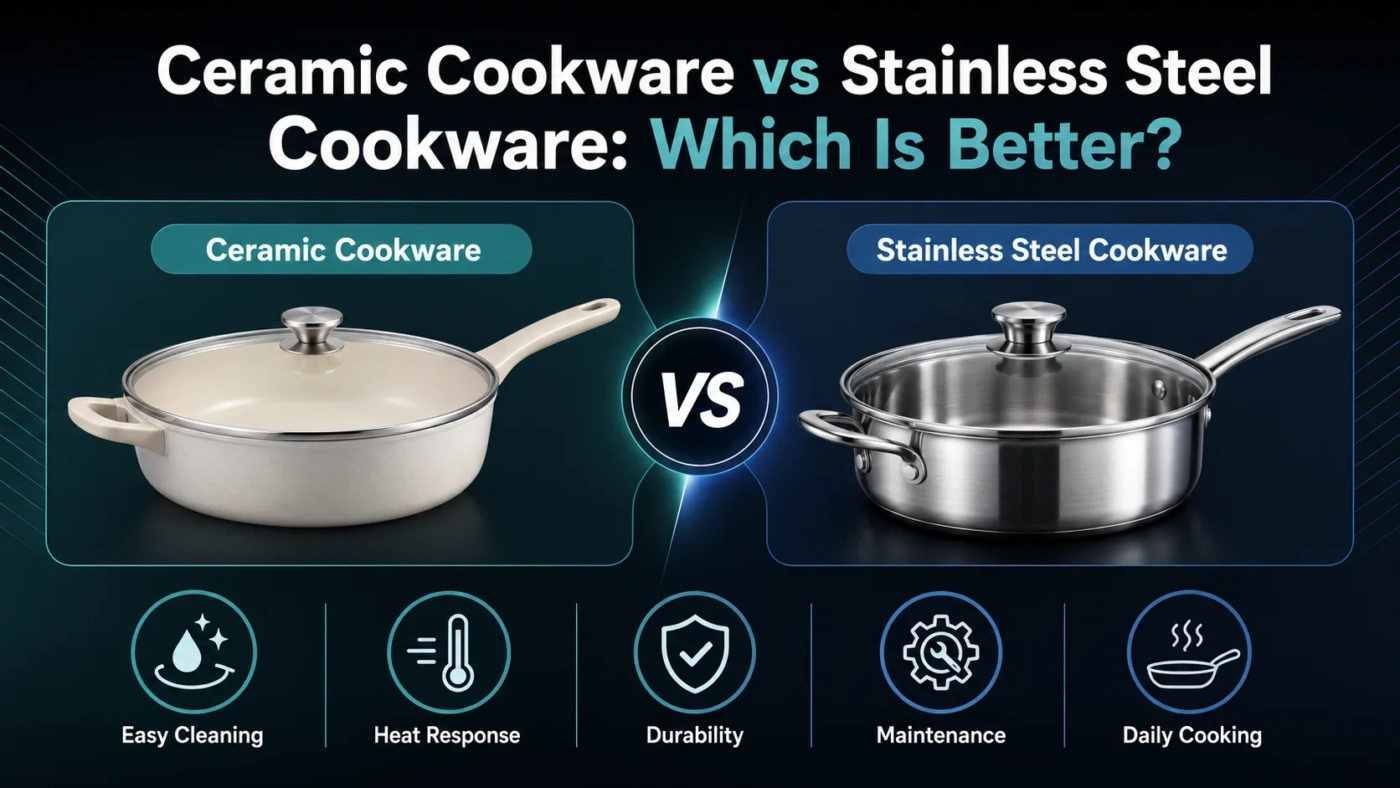
Ceramic cookware is usually better if you want easier food release, lighter cleanup, and a gentler cooking experience for eggs, pancakes, fish, and low-to-medium heat meals. Stainless steel cookware is usually better if you want higher heat tolerance, better browning, longer lifespan, and cookware that can handle daily use for many years. For most kitchens, ceramic works best as a nonstick helper pan, while stainless steel works better as the main long-term cookware set.
- Main Differences
- What Ceramic Cookware Offers
- What Stainless Steel Cookware Offers
- Cooking Performance
- Maintenance and Long-Term Use
- Price and Value
- Choose Ceramic Cookware If
- Choose Stainless Steel Cookware If
- Best Choice by User Type
- Common Misunderstandings
- Ceramic Cookware Is Not Always Solid Ceramic
- Stainless Steel Is Not Supposed To Behave Like Nonstick
- Nonstick Convenience Does Not Mean Better Cooking For Every Meal
- More Expensive Does Not Always Mean Better Fit
- Small Cookware Setup That Works For Most People
- Use Ceramic For
- Use Stainless Steel For
- Cookware Terms Worth Knowing
- FAQ
- Is Ceramic Cookware Better Than Stainless Steel?
- Is Stainless Steel Harder To Cook With?
- Does Ceramic Cookware Last As Long As Stainless Steel?
- Can Stainless Steel Be Nonstick?
- Which Should You Buy First?
- Compare More Options
| Feature | Ceramic Cookware | Stainless Steel Cookware |
|---|---|---|
| Best For | Low-fat cooking, eggs, delicate foods, easy cleanup | Searing, browning, sauces, daily long-term use |
| Food Release | Easier at first because of the smooth coating | Needs preheating, oil, and technique |
| Heat Tolerance | Better at low to medium heat | Better for medium-high and high-heat cooking |
| Browning and Searing | Limited; high heat can shorten coating life | Excellent when properly preheated |
| Durability | Coating can wear, chip, or lose release over time | Can last many years with normal care |
| Maintenance | Gentle utensils and hand washing are usually best | More forgiving, but may need scrubbing for stains |
| Learning Curve | Easier for beginners | Takes practice but rewards technique |
| Long-Term Value | Good if used carefully, but often replaced sooner | Better long-term value for frequent cooks |
Main Differences
The main difference is the cooking surface. Ceramic cookware usually means a metal pan with a ceramic-style nonstick coating. That coating helps food release with less oil, but it is also the part most likely to wear out. Stainless steel cookware has no nonstick coating. Food can stick if the pan is too cold, too dry, or used with poor timing, but the surface is much more durable.
Ceramic cookware is friendlier for low-stress cooking. It feels easier from day one because it does not ask for much technique. Stainless steel is more demanding at first, yet it gives better results for seared meat, browned vegetables, fond, deglazing, and sauces.
What Ceramic Cookware Offers
Ceramic cookware is popular because it feels simple. Food releases more easily, less oil is often needed, and cleanup can be quick when the pan is used gently. It is especially useful for foods that are likely to break apart or stick, such as eggs, soft fish, crepes, and tofu.
The tradeoff is lifespan. The smooth surface can slowly lose its release, especially if it is overheated, scrubbed harshly, stacked without protection, or used with metal utensils. Ceramic cookware can still be a smart buy, but it should be treated as a convenience surface rather than a pan for hard searing or rough kitchen work.
What Stainless Steel Cookware Offers
Stainless steel cookware is built for range. It can handle sautéing, browning, simmering, boiling, deglazing, and many oven tasks, depending on the handle and construction. It is also a better fit for cooks who want to make pan sauces because browned bits on the surface can be released with liquid.
The downside is that stainless steel is not naturally nonstick. It needs the right heat level, enough fat, and patience. For example, proteins often release after browning instead of immediately. Once that cooking rhythm becomes familiar, stainless steel feels far more flexible than it first appears.
Cooking Performance
For eggs and delicate foods, ceramic has the easier start. It reduces frustration because food slides more readily across the surface. For steak, chicken thighs, mushrooms, onions, and pan sauces, stainless steel usually performs better because it supports stronger browning and higher heat.
Heat control also feels different. Ceramic pans are best when the cook stays patient and avoids blasting the burner. Stainless steel can take more heat, but it rewards preheating and timing. A stainless pan that is too cold may grab food; a pan that is too hot may burn oil before the food cooks properly.
Maintenance and Long-Term Use
Ceramic cookware needs gentle care. Silicone, wood, or nylon utensils are better choices. Hand washing helps preserve the surface, and pan protectors can prevent scratches during storage. Even with careful use, the release can fade over time.
Stainless steel needs a different kind of care. It may show rainbow marks, water spots, or browned residue, but these are usually cleaning issues rather than failure. Stainless steel can often be restored with soaking, gentle abrasives made for cookware, or proper scrubbing. It does not depend on a delicate coating to keep working.
Price and Value
Ceramic cookware can feel like better value at first because it solves sticking quickly. It is often attractive for buyers who want a pan that works well without much cooking practice. The value drops if the coating wears sooner than expected.
Stainless steel may cost more for a well-made set, but the long-term value is often stronger. A good stainless steel pan can stay in regular use for many years. If the budget allows only one serious cookware set, stainless steel is usually the safer long-term choice.
Choose Ceramic Cookware If
- You want a pan that feels easy from the first use.
- You cook eggs, fish, pancakes, and soft foods often.
- You prefer low-to-medium heat cooking.
- You want to use less oil for everyday meals.
- You do not mind replacing the pan when the surface wears down.
- You are willing to avoid metal utensils and harsh cleaning.
Choose Stainless Steel Cookware If
- You want cookware that can handle daily cooking for many years.
- You care about browning, searing, and pan sauces.
- You cook meat, mushrooms, onions, pasta sauces, soups, or one-pan meals.
- You do not want to depend on a coating.
- You are willing to learn preheating and oil timing.
- You want better long-term value from fewer replacements.
Best Choice by User Type
Common Misunderstandings
Ceramic Cookware Is Not Always Solid Ceramic
Many products called ceramic cookware are actually metal pans with a ceramic-style coating. That coating affects food release and care needs, while the metal body affects heating.
Stainless Steel Is Not Supposed To Behave Like Nonstick
Stainless steel can release food well, but it needs technique. Preheating, adding oil at the right time, and waiting before moving food can make a large difference.
Nonstick Convenience Does Not Mean Better Cooking For Every Meal
Ceramic can make cooking easier, but it is not the best surface for every task. Strong searing and deep browning are usually better on stainless steel.
More Expensive Does Not Always Mean Better Fit
The better choice depends on how you cook. A careful breakfast cook may love ceramic. A cook who makes sauces and seared meals may get far more value from stainless steel.
Small Cookware Setup That Works For Most People
A practical kitchen does not need to choose only one surface. Many home cooks get the best results from stainless steel as the main cookware and ceramic as a helper pan. Stainless steel can handle sautéing, boiling, searing, and sauces. Ceramic can handle eggs and delicate foods without turning breakfast into a scraping session.
Use Ceramic For
- Eggs and omelets
- Pancakes and crepes
- Delicate fish
- Low-oil vegetable cooking
- Quick, gentle meals
Use Stainless Steel For
- Searing meat
- Browning mushrooms and onions
- Pan sauces
- Pasta dishes
- Longer, higher-heat cooking
Cookware Terms Worth Knowing
FAQ
Is Ceramic Cookware Better Than Stainless Steel?
Ceramic cookware is better for easy food release and low-to-medium heat cooking. Stainless steel is better for durability, browning, searing, and long-term use.
Is Stainless Steel Harder To Cook With?
Yes, it has a learning curve. Food release depends on heat, oil, timing, and patience. Once learned, stainless steel becomes more flexible than ceramic for many recipes.
Does Ceramic Cookware Last As Long As Stainless Steel?
Usually not. Ceramic coatings can lose their easy-release surface over time. Stainless steel has no coating to wear away, so it usually lasts longer.
Can Stainless Steel Be Nonstick?
It can behave more smoothly with proper preheating and oil, but it is not a true nonstick surface. Delicate foods are still easier on ceramic cookware.
Which Should You Buy First?
If you want one main cookware set, choose stainless steel. If you already have basic cookware and need an easy pan for eggs and delicate foods, choose ceramic.