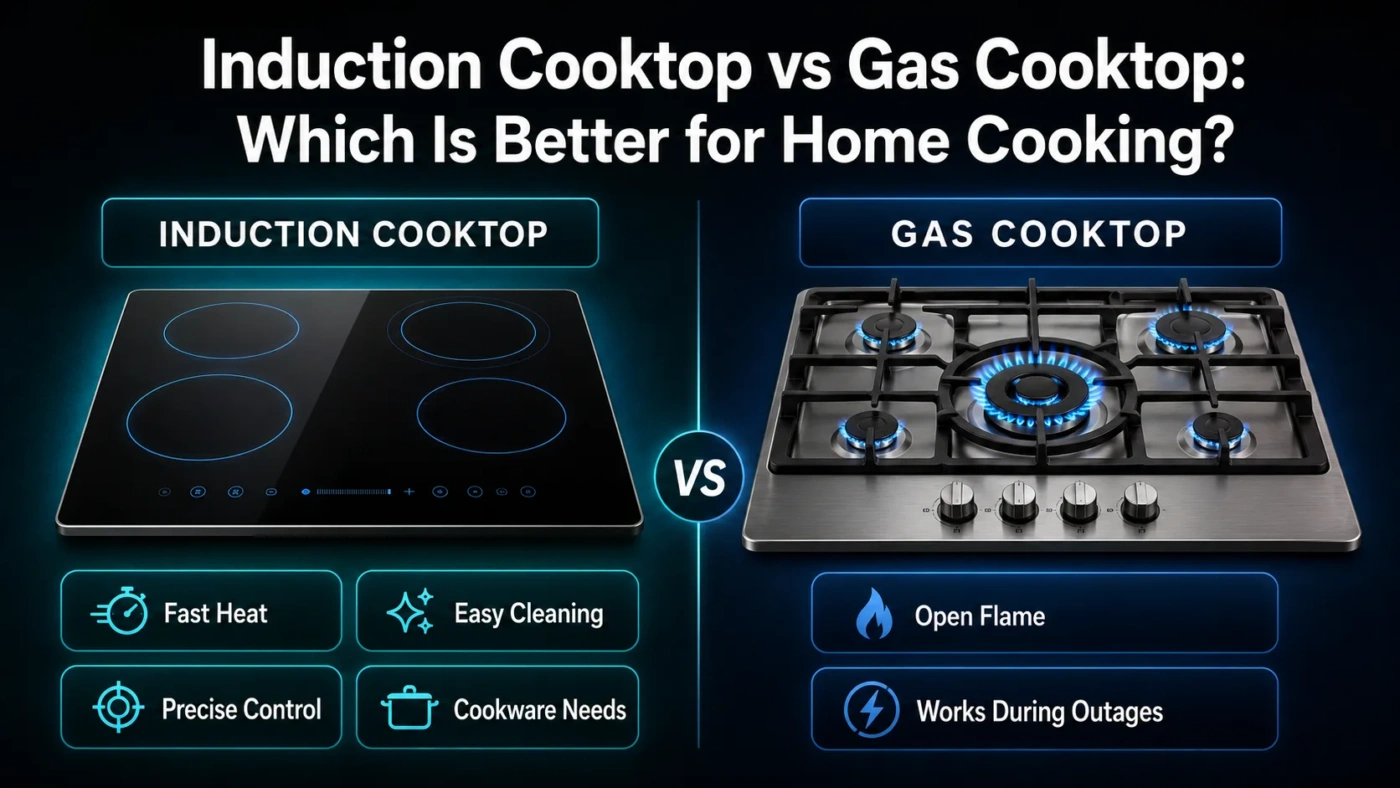
Induction cooktops are usually the better choice if you want faster heating, easier cleanup, lower kitchen heat, and a smoother daily cooking routine. Gas cooktops are usually the better fit if you prefer visible flame control, already have a gas line, use many pan types, or cook with techniques that benefit from open heat. The better option depends less on cooking skill and more on your kitchen setup, cookware, ventilation, budget, and the way you actually cook.
- Main Differences
- Where Each Option Fits Best
- What Induction Offers
- What Gas Offers
- Price And Long-Term Value
- Setup And Compatibility
- Cooking Performance In Real Use
- Boiling And High Heat
- Sauce, Simmering, And Low Heat
- Stir-Frying And Flame Feel
- Cleaning After Cooking
- Safety And Ventilation
- Decision Tree
- Choose Induction If
- Choose Gas If
- Common Misunderstandings
- Induction Is Not The Same As A Regular Electric Cooktop
- Gas Is Not Automatically Better For Every Skilled Cook
- Induction Still Gets Hot
- Gas Needs More Than A Flame
- Best Choice By User Type
- Short Glossary
- FAQ
- Is Induction Better Than Gas For Everyday Cooking?
- Do I Need Special Pans For Induction?
- Is Gas Cheaper Than Induction?
- Can Induction Replace Gas For Serious Home Cooking?
- Which One Should I Choose?
| Feature | Induction Cooktop | Gas Cooktop |
|---|---|---|
| Best For | Fast boiling, precise low heat, easy cleaning, cooler kitchens | Flame-based cooking, broad cookware use, familiar control |
| Heat Source | Magnetic energy heats the pan directly | Open flame heats the cookware from below |
| Speed | Usually faster for boiling and heat changes | Fast response, but more heat escapes around the pan |
| Temperature Control | Strong control at low and medium settings | Visual flame makes adjustments easy to read |
| Cookware | Requires magnetic cookware | Works with most common cookware materials |
| Cleaning | Flat glass surface, easier wipe-down | Grates and burner parts need more cleaning |
| Kitchen Heat | Less waste heat around the pan | Adds more heat to the room |
| Setup Needs | May need suitable electrical capacity | Needs gas connection and ventilation |
| Power Outage Use | Does not cook without electricity | May work during some outages if ignition and local rules allow |
| Best Overall Fit | Modern daily cooking with speed and easy cleanup | Traditional flame cooking with broad pan flexibility |
Main Differences
The biggest difference is how heat reaches the pan. An induction cooktop creates a magnetic field that heats compatible cookware directly. The glass surface warms because the pan gets hot, not because the surface itself is the main heat source.
A gas cooktop uses a visible flame. The flame heats the bottom and sides of the cookware, while some heat escapes into the kitchen. This gives gas a familiar feel, especially for cooks who like to judge heat by flame size.
Where Each Option Fits Best
What Induction Offers
An induction cooktop is best understood as an electric cooktop that does not heat in the usual way. Instead of warming a coil or radiant element under glass, it uses magnetic energy to make the pan itself hot. This is why induction can feel unusually quick once the right cookware is used.
Induction is strong for boiling, simmering, melting, reheating, and daily family meals. It also keeps the cooking area cleaner because spills are less likely to bake onto a scorching hot burner surface. The surface can still get hot from the pan, so it is not risk-free, but it often cools faster than many traditional cooking surfaces.
What Gas Offers
A gas cooktop gives direct flame control. Many cooks like seeing the flame because it gives instant visual feedback. Lower the flame, and the pan receives less heat. Raise it, and the heat changes immediately.
Gas is also forgiving with cookware. Rounded pans, older pans, and non-magnetic pans can usually be used without checking compatibility. For homes that already have a gas line, installation may also feel familiar, though proper ventilation and safe connection still matter.
Price And Long-Term Value
Induction cooktops can cost more upfront, especially if the kitchen needs electrical work or new cookware. The cooktop itself may also be more expensive than a basic gas unit. Over time, the value comes from faster cooking, less wasted heat, easier cleaning, and a smoother routine.
Gas cooktops can be cheaper to buy in some cases, especially for basic models. If the home already has a gas connection, setup may be simpler. Long-term value depends on local energy costs, ventilation needs, maintenance, and how much you value flame-based cooking.
Setup And Compatibility
Induction needs compatible cookware. A simple way to check is the magnet test: if a magnet sticks firmly to the bottom of the pan, the pan may work on induction. Cast iron and many stainless steel pans work well. Aluminum, copper, glass, and some stainless steel pans may not work unless they have a magnetic base.
Gas needs a gas supply, proper connection, and ventilation. It can work with more pan types, but burner layout, grate stability, and flame size affect daily use. If you cook with small pans, wide pans, or heavy cookware, burner spacing matters.
Cooking Performance In Real Use
Boiling And High Heat
Induction usually wins for boiling water and heating a pan quickly. Because the pan is heated directly, less energy escapes around the sides. This is useful for pasta, rice, soups, and weeknight cooking when speed matters.
Sauce, Simmering, And Low Heat
Induction can be excellent for gentle heat because many units allow fine step control. This helps with sauces, chocolate, custards, and slow simmering. Gas can also simmer well, but performance depends on burner design and how low the flame can stay without going out.
Stir-Frying And Flame Feel
Gas has an advantage if your cooking style depends on flame movement, tossing pans, or heat around curved cookware. Induction can still be fast and powerful, but flat-bottom contact matters more.
Cleaning After Cooking
Induction is easier for most daily cleanup. A wipeable glass surface is simpler than removing grates and cleaning around burner parts. Gas cooktops can stay clean with regular care, but spills and grease have more places to settle.
Safety And Ventilation
Induction removes open flame from the cooking surface, which can be helpful in busy kitchens. It also reduces the chance of leaving a flame on by mistake. Still, hot pans can burn skin, glass can stay warm after cooking, and cookware must be handled carefully.
Gas cooking needs good ventilation because combustion and cooking fumes enter the kitchen air. A working range hood or suitable ventilation setup is important. Flame safety also matters: pan handles, towels, loose sleeves, and nearby items should stay away from burners.
Decision Tree
Choose Induction If
Choose Gas If
Common Misunderstandings
Induction Is Not The Same As A Regular Electric Cooktop
Induction is electric, but it does not behave like older coil or radiant glass cooktops. It heats compatible pans directly, which makes it faster and more responsive than many people expect.
Gas Is Not Automatically Better For Every Skilled Cook
Gas feels familiar and gives visual control, but induction can be very precise. The better choice depends on cooking style, pan choice, ventilation, and setup.
Induction Still Gets Hot
The cooktop surface does not create heat in the same way as a flame or radiant element, but the hot pan transfers heat back to the glass. Treat the surface with care after cooking.
Gas Needs More Than A Flame
A gas cooktop also needs ventilation, cleaning, burner care, and safe installation. The visible flame is simple to understand, but the full setup still matters.
Best Choice By User Type
| User Type | Better Fit | Reason |
|---|---|---|
| Busy Daily Cook | Induction | Fast heating and easier cleanup save time. |
| Traditional Flame Cook | Gas | Visible flame control feels familiar and direct. |
| Small Apartment Kitchen | Induction | Less room heat and a flat surface can make compact kitchens easier to manage. |
| Cookware Collector | Gas | Works with a wider range of pan materials and shapes. |
| Beginner Home Cook | Induction | Clear controls, quick response, and easier cleaning reduce daily friction. |
| Power Outage Planner | Gas | May offer more flexibility during some outages, depending on ignition type and local safety guidance. |
Short Glossary
FAQ
Is Induction Better Than Gas For Everyday Cooking?
For many homes, yes. Induction is often faster, cleaner, and easier to control for daily meals. Gas may still be better if you prefer flame cooking or need wider cookware compatibility.
Do I Need Special Pans For Induction?
You need magnetic cookware. Cast iron and many stainless steel pans work, while plain aluminum, copper, and glass usually do not unless they have an induction-ready base.
Is Gas Cheaper Than Induction?
It depends on the cooktop, installation, local energy prices, and whether you already have the right connection. Gas can be cheaper upfront in some kitchens, while induction may offer better daily efficiency and easier maintenance.
Can Induction Replace Gas For Serious Home Cooking?
Yes, for many cooking styles. Induction handles boiling, searing, simmering, melting, and reheating very well. Gas remains appealing for cooks who want flame feedback or use cookware that does not work on induction.
Which One Should I Choose?
Choose induction if you want speed, easy cleanup, precise control, and a cooler kitchen. Choose gas if you value visible flame, broad cookware compatibility, and a cooking style built around open heat.