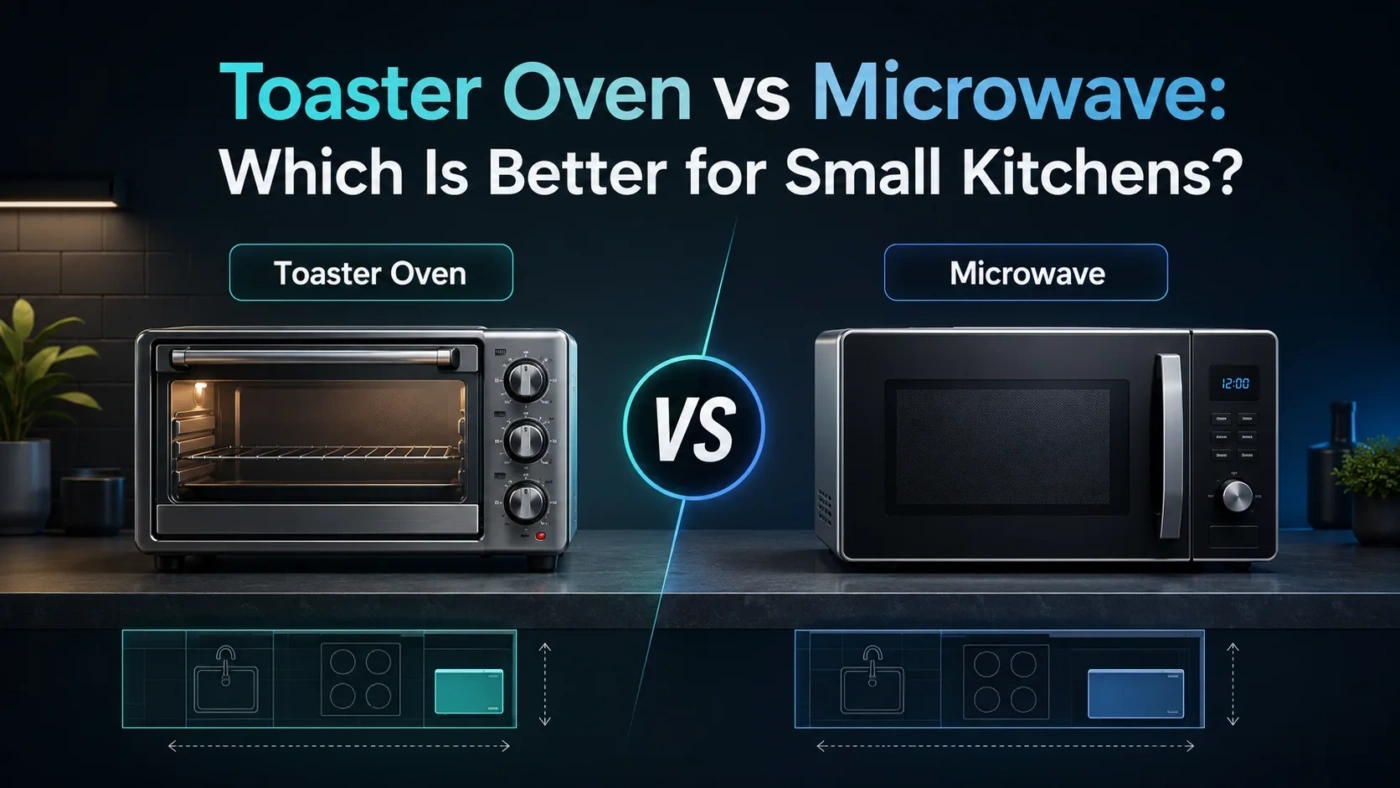
Toaster ovens and microwaves solve different small-kitchen problems. A microwave is usually better for fast reheating, defrosting, steaming, and low-effort daily use. A toaster oven is better when you want crisp edges, browned surfaces, toast, baked snacks, roasted vegetables, or small portions that feel closer to oven cooking. For most small kitchens, the better choice depends less on size and more on what you eat most often: leftovers and drinks favor a microwave, while toast, frozen snacks, and crisp textures favor a toaster oven.
- Main Differences
- Toaster Oven Strength
- Microwave Strength
- Which One Saves More Space?
- Speed And Daily Convenience
- Food Quality And Texture
- Cost And Long-Term Value
- Choose A Toaster Oven If
- Choose A Microwave If
- Small-Kitchen Decision Tree
- Safety And Cookware Differences
- Cleaning And Maintenance
- Best Choice By User Type
- Common Misunderstandings
- A Toaster Oven Does Not Fully Replace A Microwave
- A Microwave Does Not Make Food Worse By Default
- Smaller Does Not Always Mean Better
- More Functions Are Not Always More Useful
- Where Each Option Fits Best
- Compare More Options
- FAQ
- Is A Toaster Oven Better Than A Microwave For A Small Kitchen?
- Can A Toaster Oven Replace A Microwave?
- Can A Microwave Make Food Crispy?
- Which One Uses Less Counter Space?
- Should I Buy Both For A Small Kitchen?
| Feature | Toaster Oven | Microwave |
|---|---|---|
| Best Use | Toasting, crisping, baking small portions, reheating food that should stay dry or crunchy | Reheating leftovers, defrosting, steaming, warming drinks, fast single meals |
| Speed | Slower because it heats the chamber and food surface | Usually much faster for reheating and soft foods |
| Texture | Better for browning, crisping, and dry heat results | Better for moist reheating, but can make breaded or fried foods soft |
| Counter Space | Often compact, but needs heat clearance around it | Can be compact, but deeper models may take more fixed space |
| Ventilation And Heat | Gets hot outside and warms the kitchen more | Usually keeps surrounding heat lower |
| Cookware | Uses oven-safe trays, pans, foil when allowed by the manual | Uses microwave-safe containers; metal is generally avoided |
| Cleaning | Crumbs, trays, splatter, and baked-on grease need routine cleaning | Splatter wipes up easily if cleaned soon after use |
| Best Small-Kitchen Fit | Best if it can replace toast, small baking, and some oven tasks | Best if speed, simple reheating, and low heat output matter most |
Main Differences
The biggest difference is how the food heats. A toaster oven uses dry radiant heat, similar to a small conventional oven. That makes it strong for surface texture: toast browns, pizza edges crisp, cheese bubbles, and roasted vegetables can get lightly caramelized.
A microwave heats food in a different way, working especially well with moisture inside food. That makes it excellent for quick reheating, defrosting, and warming soft or liquid foods. It is less suited to foods that need a dry, crisp surface.
Toaster Oven Strength
Texture is the main advantage. It can make small portions taste closer to freshly cooked food, especially when bread, crust, pastry, cheese, or breaded coatings are involved.
Microwave Strength
Speed is the main advantage. It can reheat a bowl of food, warm soup, soften butter, steam vegetables, or defrost ingredients with minimal setup.
Which One Saves More Space?
A microwave can look larger, but a toaster oven is not always the space-saving winner. The real issue is usable clearance. A toaster oven releases more heat, so it needs open space around the top, sides, and back. It should not be pushed tightly under low cabinets unless the appliance instructions allow that setup.
A compact microwave may take a deeper footprint, but it usually produces less outside heat during normal use. For a very small kitchen with low upper cabinets, that can make a microwave easier to place safely.
Speed And Daily Convenience
If the main question is speed, the microwave wins for most daily tasks. Leftovers, rice, soup, oatmeal, frozen vegetables, and drinks are usually faster in a microwave. It also needs less attention because you are not waiting for dry heat to crisp or brown the food.
A toaster oven needs more patience. Some foods need preheating, and even when preheating is not required, the result takes longer. The tradeoff is that the waiting time can be worth it when texture matters. A slice of pizza, a sandwich, or a small tray of fries often comes out better from a toaster oven than from a microwave.
Food Quality And Texture
A toaster oven is the better choice for foods where surface texture matters. Toast, bagels, open-faced sandwiches, pastries, frozen snacks, roasted vegetables, small baked portions, and leftover pizza usually benefit from dry heat. It can refresh food instead of simply making it hot.
A microwave is better for foods that already have moisture or do not need browning. Soups, stews, rice bowls, pasta, steamed vegetables, oatmeal, and beverages are practical microwave tasks. It can also reheat dense leftovers more evenly when stirred or rotated during heating.
Cost And Long-Term Value
Both appliances can be affordable, but the better value depends on what it replaces. A microwave gives strong value if it handles daily reheating, simple meals, and defrosting. It can reduce food waste because leftovers become easy to use again.
A toaster oven gives strong value if it replaces several small appliances or reduces use of a full-size oven. In a small kitchen, it can act as a toast maker, small baking oven, snack heater, and finishing oven. Larger or convection-style models may cost more, but they can also cover more cooking tasks.
Choose A Toaster Oven If
Choose A Microwave If
Small-Kitchen Decision Tree
Safety And Cookware Differences
A toaster oven needs more heat awareness. The outside can become hot, food can burn if left too long, and crumbs should be removed because they can smoke. Use oven-safe trays and keep packaging, towels, and plastic away from the appliance.
A microwave has different limits. Containers must be microwave-safe, and metal should generally stay out unless the appliance instructions clearly allow a specific accessory. Covered reheating can reduce splatter, but sealed containers should not be heated because pressure can build.
Cleaning And Maintenance
A microwave is usually easier to clean after normal use. Splatter can be wiped from the interior walls, door, and turntable. The main habit is cleaning spills before they dry.
A toaster oven needs more routine attention. Crumbs collect, trays discolor, and grease can bake onto surfaces. If you cook cheese, breaded foods, or oily snacks often, the cleaning difference becomes more noticeable. A removable crumb tray helps, but it still needs to be emptied regularly.
Best Choice By User Type
| User Type | Better Choice | Reason |
|---|---|---|
| Student Or Dorm User | Microwave | Fast reheating, simple meals, lower heat output, and less cleanup. |
| Toast And Snack Lover | Toaster Oven | Better for crisp bread, frozen snacks, sandwiches, and small baked items. |
| Meal Prep User | Microwave | Reheats prepared portions quickly and works well with rice, vegetables, soups, and bowls. |
| Small-Apartment Cook | Depends On Cooking Style | Microwave for speed and low heat; toaster oven for replacing small oven tasks. |
| Texture-Focused Eater | Toaster Oven | Dry heat improves browning and crispness in many foods. |
| Busy Family Kitchen | Microwave First, Toaster Oven Second | The microwave handles daily speed; the toaster oven adds better finishing and snacks if space allows. |
Common Misunderstandings
A Toaster Oven Does Not Fully Replace A Microwave
It can reheat many foods, but it is slower and less convenient for soups, drinks, rice, and moist leftovers. If reheating is your main task, a toaster oven may feel frustrating.
A Microwave Does Not Make Food Worse By Default
It depends on the food. A microwave is excellent for many moist foods and leftovers. It only struggles when the food needs a dry, crisp, or browned surface.
Smaller Does Not Always Mean Better
A tiny appliance can be awkward if it does not fit your usual plates, trays, mugs, or food portions. Measure the interior as well as the exterior.
More Functions Are Not Always More Useful
Some appliances include many cooking modes, but daily value comes from the tasks you repeat. A simple appliance that matches your routine can be the better purchase.
Where Each Option Fits Best
Choose the microwave if your small kitchen needs speed, simple reheating, defrosting, and low heat output. It is the more practical first appliance for many students, renters, office kitchens, and meal-prep users.
Choose the toaster oven if your small kitchen needs better texture, toast, crisp snacks, small baking, and an alternative to using a full-size oven. It is the better first appliance for people who care more about browned, dry-heat cooking than instant reheating.
If space and budget allow only one, look at your last five meals. If most were leftovers, bowls, soups, or frozen items that just needed heating, choose the microwave. If most involved bread, crust, cheese, snacks, or small oven-style cooking, choose the toaster oven.
Compare More Options
FAQ
Is A Toaster Oven Better Than A Microwave For A Small Kitchen?
A toaster oven is better if you want crisp, toasted, browned, or baked results. A microwave is better if you want fast reheating, defrosting, steaming, and lower heat output. For many small kitchens, the microwave is more practical first, while the toaster oven improves food texture.
Can A Toaster Oven Replace A Microwave?
It can replace some reheating and small cooking tasks, but it does not replace the microwave well for drinks, soups, rice, meal-prep bowls, and fast defrosting. It is better viewed as a small oven replacement than a microwave replacement.
Can A Microwave Make Food Crispy?
A regular microwave is not designed for crisping or browning. It can heat food quickly, but breaded, fried, or crust-based foods often turn soft. A toaster oven is the better choice for crisp texture.
Which One Uses Less Counter Space?
It depends on the model and placement needs. A toaster oven may look compact, but it needs heat clearance. A microwave may be deeper, but it often fits better under cabinets if there is enough ventilation space.
Should I Buy Both For A Small Kitchen?
Buying both makes sense if you cook at home often and have enough safe space. The microwave handles fast heating, while the toaster oven improves texture. If you only have room for one, choose based on your most repeated meals.