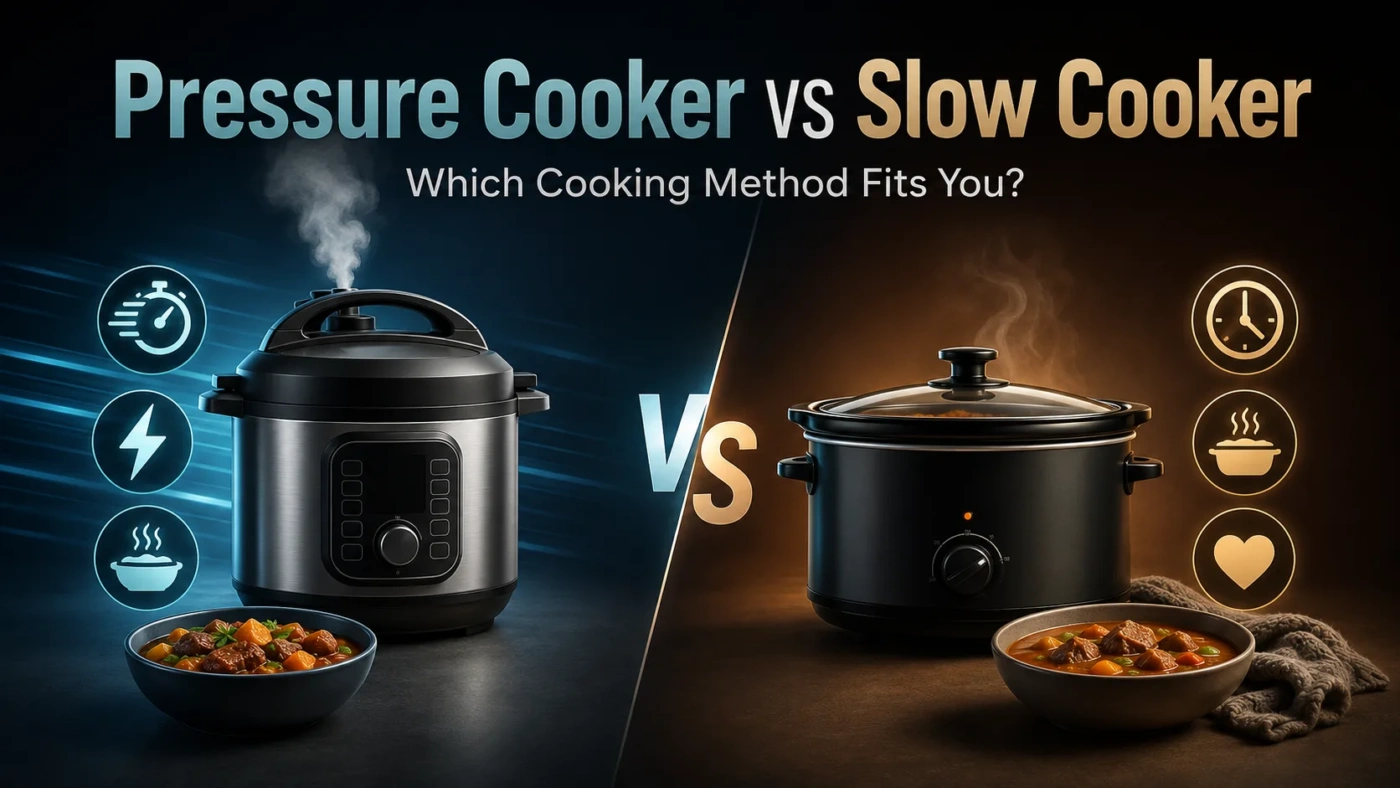
Pressure cookers and slow cookers solve the same problem in opposite ways: one cooks meals fast with sealed steam pressure, while the other cooks gently over several hours. Choose a pressure cooker if you want tender beans, stews, rice, grains, soups, and tougher cuts in less time. Choose a slow cooker if you want low-effort meals that can simmer while you work, run errands, or prepare food ahead of time.
- Main Differences
- What A Pressure Cooker Does Best
- What A Slow Cooker Does Best
- Speed And Meal Timing
- Flavor, Texture, And Sauce Results
- Safety And Ease Of Use
- Choose A Pressure Cooker If
- Choose A Slow Cooker If
- Cost And Long-Term Value
- Best Choice By User Type
- Common Misunderstandings
- “A Pressure Cooker Always Makes Better Food”
- “A Slow Cooker Is Only For Stew”
- “Pressure Cooking Has No Waiting Time”
- “Slow Cookers Cannot Overcook Food”
- Which One Fits Your Cooking Routine?
- Compare More Options
- FAQ
- Is A Pressure Cooker Better Than A Slow Cooker?
- Can A Pressure Cooker Replace A Slow Cooker?
- Can A Slow Cooker Replace A Pressure Cooker?
- Which One Is Better For Beginners?
- Which One Is Better For Meal Prep?
| Feature | Pressure Cooker | Slow Cooker |
|---|---|---|
| Cooking Style | High heat and sealed steam pressure | Low, steady heat over a long period |
| Best For | Fast dinners, beans, rice, soups, stews, tough cuts | Set-and-wait meals, roasts, chili, pulled meats, meal prep |
| Typical Time | Often 15 minutes to 1 hour, plus pressure time | Often 4 to 10 hours |
| Hands-On Effort | More active at the start and finish | Very low after ingredients are added |
| Flavor Style | Deep flavor fast, but less evaporation | Mellow, blended flavor with long cooking |
| Texture Control | Fast, but overcooking can happen quickly | Forgiving, though some foods can turn soft |
| Beginner Friendliness | Easy after learning pressure release and liquid rules | Very easy for basic meals |
| Kitchen Schedule | Better for last-minute cooking | Better for planned, all-day cooking |
| Main Limitation | Less checking and adjusting while cooking | Not useful when dinner is needed fast |
Main Differences
The main difference is speed versus scheduling. A pressure cooker traps steam, raises internal pressure, and cooks food faster than normal stovetop or oven methods. A slow cooker uses lower heat for a long stretch, which makes it better for people who want to start a meal early and leave it alone.
A pressure cooker changes how you cook because timing matters. Once the lid is sealed, you usually cannot taste, stir, or adjust until pressure is released. A slow cooker is more relaxed. You can often lift the lid, check the texture, add ingredients later, or let the food continue cooking if dinner is delayed.
The flavor difference is not about one being better. Pressure cooking builds rich flavor quickly, but it holds in liquid. Sauces may need reducing after cooking. Slow cooking gives flavors more time to blend, but delicate ingredients can lose shape if added too early.
What A Pressure Cooker Does Best
A pressure cooker is built for speed. It works especially well with foods that normally take a long time to soften, such as dried beans, lentils, chickpeas, tougher meat cuts, stock ingredients, whole grains, and dense vegetables. It can also make soups and stews quickly because heat transfers efficiently inside the sealed pot.
The tradeoff is control. Pressure cookers need enough liquid to create steam, and the lid stays locked while the pot is under pressure. This means you need to choose timing carefully, especially with vegetables, pasta, seafood, dairy-based sauces, or other foods that can overcook fast.
What A Slow Cooker Does Best
A slow cooker is built around convenience. It is useful when you can prepare ingredients in advance and let the meal cook over several hours. It shines with chili, pot roast, pulled meat, stews, soups, sauces, and meals where a soft, blended texture is part of the appeal.
Slow cookers are forgiving, but they are not ideal for every ingredient. Lean meats can dry out, vegetables can become too soft, and some sauces may taste flat unless browned ingredients, spices, salt, acid, or fresh finishing ingredients are used well. Slow cooking rewards planning more than speed.
Speed And Meal Timing
If dinner often starts late, a pressure cooker fits better. It can turn uncooked ingredients into a full meal without needing a morning plan. Even when you include time for the pot to reach pressure and release pressure, it is usually far faster than a slow cooker.
If your day is predictable, a slow cooker can be easier. You add food before work or earlier in the day, then return to a cooked meal. The slow cooker does not win on speed, but it wins on schedule comfort when you like meals ready at a set time.
Flavor, Texture, And Sauce Results
Pressure cooking keeps moisture inside the pot. That helps food cook fast and stay tender, but it also means sauces may come out thinner than expected. For thicker results, simmer the sauce after pressure cooking, use less liquid when safe, or add thickening ingredients after cooking.
Slow cooking gives food more time to soften and blend. This works well for stews and shredded meats, but it can make vegetables mushy if they cook too long. For better texture, add tender vegetables later, use larger cuts, or finish with fresh herbs, citrus, or vinegar when the dish needs brightness.
Safety And Ease Of Use
Modern pressure cookers are designed with locking lids and pressure controls, but they still require attention to basic rules. Do not open the lid while the pot is under pressure. Do not overfill it. Use enough liquid. Keep the valve area clean. Follow the cooker’s own instructions for pressure release.
Slow cookers feel less technical because there is no sealed pressure. The main safety habits are different: keep food at safe temperatures, avoid leaving cooked food sitting too long after cooking, thaw ingredients properly before use, and use the correct heat setting for the recipe.
Safety Note: A pressure cooker should never be forced open while pressurized. With either method, follow the appliance instructions and use safe food handling habits.
Choose A Pressure Cooker If
- You want faster meals after work or school.
- You cook beans, lentils, chickpeas, grains, soups, or stews often.
- You want tender results from tougher cuts without waiting all day.
- You prefer one-pot cooking with shorter total time.
- You are comfortable learning pressure release, liquid levels, and timing.
- You want more flexibility when meal planning changes.
A pressure cooker is the better fit for people who value speed and do not mind a small learning curve. It is especially useful in kitchens where meals are decided late, batch cooking happens on weekends, or dried ingredients are used often.
Choose A Slow Cooker If
- You like preparing food early and letting it cook while you do other things.
- You prefer simple, low-attention cooking.
- You make chili, stew, pot roast, pulled meat, or sauces often.
- You want meals that are ready at the end of the day.
- You prefer a relaxed cooking style with more room to check and adjust.
- You do not need dinner finished quickly.
A slow cooker is the better fit for people who plan ahead and want cooking to feel calm. It is not the fastest option, but it can be the easiest one when your schedule gives the food enough time.
Cost And Long-Term Value
Both appliances can offer good value, but the better value depends on how you cook. A pressure cooker may replace several cooking tasks, including rice, beans, soups, and fast braises. A slow cooker may be enough if your main goal is simple batch meals with very little active work.
If you cook from dried beans, grains, tougher cuts, and pantry staples, a pressure cooker may save more time over the long run. If you mostly want chili, shredded meat, stew, or ready-later dinners, a slow cooker can be the more relaxed purchase. Avoid buying either one only because it seems popular; choose the one that matches your schedule.
Best Choice By User Type
| User Type | Better Fit | Reason |
|---|---|---|
| Busy Weeknight Cook | Pressure Cooker | It handles late starts and shorter dinner windows better. |
| Meal Prep Planner | Either | Pressure cooking is faster; slow cooking is easier to schedule. |
| Beginner Cook | Slow Cooker | Basic recipes are simple and forgiving. |
| Bean And Grain Cook | Pressure Cooker | It reduces long cooking times for dense pantry staples. |
| Family Batch Cook | Slow Cooker | It works well for large soft-textured meals served later. |
| Small Kitchen User | Pressure Cooker | It can cover more cooking jobs in one appliance. |
Common Misunderstandings
“A Pressure Cooker Always Makes Better Food”
Not always. It makes many foods faster, but delicate ingredients can overcook. Some meals also benefit from slow, gentle heat.
“A Slow Cooker Is Only For Stew”
Stew is a natural fit, but slow cookers can also handle sauces, shredded meat, soups, beans, and warm party-style dishes.
“Pressure Cooking Has No Waiting Time”
Pressure cookers still need time to reach pressure and release pressure. The total time is longer than the timer alone.
“Slow Cookers Cannot Overcook Food”
They can. Long cooking can dry lean meat, soften vegetables too much, or dull fresh flavors.
Which One Fits Your Cooking Routine?
Choose a pressure cooker if your main problem is time. It is the better match for fast meals, dense ingredients, last-minute cooking, and kitchens where one appliance needs to do many jobs.
Choose a slow cooker if your main problem is effort. It is the better match for planned meals, long unattended cooking, and dishes that improve with gentle heat over several hours.
If you cook often and have room for both, they can work together well: the pressure cooker handles fast staples and urgent dinners, while the slow cooker handles planned comfort meals and large batches. If you only want one, let your schedule decide. Short window? Pressure cooker. Long window? Slow cooker.
Compare More Options
FAQ
Is A Pressure Cooker Better Than A Slow Cooker?
A pressure cooker is better for speed, dense ingredients, and last-minute meals. A slow cooker is better for long, low-effort cooking when you can start the meal hours ahead.
Can A Pressure Cooker Replace A Slow Cooker?
It can replace some slow cooker meals, especially stews, soups, beans, and braised meats. It does not fully copy the slow cooker experience because pressure cooking uses sealed steam and shorter timing.
Can A Slow Cooker Replace A Pressure Cooker?
A slow cooker can make many similar dishes, but it cannot match pressure cooking speed. It is not the best choice when you need beans, grains, or tough ingredients cooked quickly.
Which One Is Better For Beginners?
A slow cooker is usually easier for beginners because the process is simple and forgiving. A pressure cooker is still beginner-friendly after learning liquid levels, sealing, and pressure release.
Which One Is Better For Meal Prep?
Both work well. Choose a pressure cooker if you want to cook several items quickly. Choose a slow cooker if you want one large meal to cook slowly with very little attention.