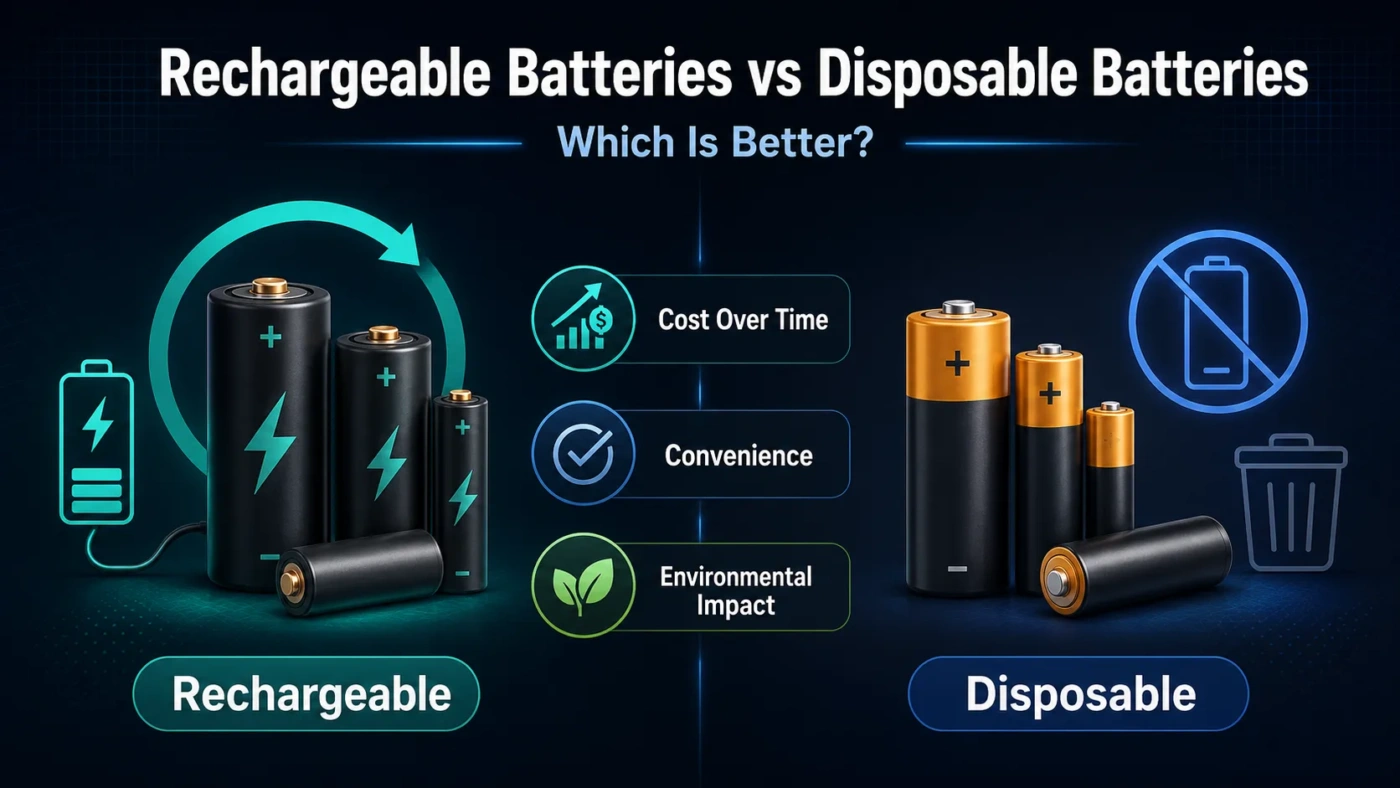
Rechargeable batteries are usually better for devices you use often, while disposable batteries are better for rare use, long storage, emergency kits, and some low-drain devices. The better choice depends less on the battery label and more on how often the device runs, how much power it needs, and whether convenience or long-term value matters more.
- Choose Rechargeable Batteries If
- Choose Disposable Batteries If
- Best Simple Rule
- Main Differences
- Rechargeable Batteries Are Built For Repeated Use
- Disposable Batteries Are Built For Readiness
- The Better Battery Depends On The Device
- Cost And Long-Term Value
- Performance In Real Use
- High-Drain Devices
- Low-Drain Devices
- Emergency And Backup Use
- Convenience And Maintenance
- Environmental Impact
- Safety And Device Compatibility
- Choose Rechargeable Batteries If
- Choose Disposable Batteries If
- Best Choice By User Type
- Common Misunderstandings
- Rechargeable Batteries Are Not Always Better
- Disposable Batteries Are Not Only For Cheap Devices
- Higher Capacity Does Not Always Mean Better Results
- All Rechargeable Batteries Are Not The Same
- Where Each Option Fits Best
- FAQ
- Are Rechargeable Batteries Worth It?
- Do Rechargeable Batteries Last As Long Per Charge As Disposable Batteries?
- Can I Use Rechargeable Batteries In Any Device?
- Which Is Better For The Environment?
- Should I Keep Both Types At Home?
- Simple Buying Decision
| Feature | Rechargeable Batteries | Disposable Batteries |
|---|---|---|
| Best For | Frequent-use devices, high-drain electronics, toys, game controllers, cameras, flashlights used often | Emergency kits, clocks, remotes, backup devices, rarely used tools |
| Upfront Cost | Higher, because you need batteries and a charger | Lower per pack |
| Long-Term Cost | Usually lower after repeated use | Usually higher if replaced often |
| Convenience | Needs charging and planning | Ready to use immediately |
| Performance In High-Drain Devices | Often better and more stable, especially NiMH AA/AAA cells | Can drain quickly in power-hungry devices |
| Shelf Life | Good, but charge slowly drops over time | Often better for long storage, especially primary lithium batteries |
| Environmental Impact | Less waste per use when reused many times | More waste if used often and not recycled properly |
| Maintenance | Requires correct charging and occasional replacement | No charging, but must be replaced and disposed of |
| Best Overall Choice | Better for regular household use | Better for backup, travel, and rarely used devices |
Choose Rechargeable Batteries If
You replace batteries often, use power-hungry devices, or want lower long-term cost. They make the most sense when the same device keeps asking for fresh batteries every few weeks or months.
Choose Disposable Batteries If
You need batteries that can sit unused for a long time, work instantly, and require no charger. They are often the easier choice for emergency drawers, smoke alarms where approved, remotes, and backup gear.
Best Simple Rule
Use rechargeable batteries for devices you touch often. Use disposable batteries for devices you might not touch for months.
Main Differences
Rechargeable Batteries Are Built For Repeated Use
Rechargeable batteries can be used, charged, and used again many times. For common AA and AAA sizes, the usual rechargeable option is NiMH. For phones, laptops, power tools, and many modern electronics, rechargeable lithium-ion battery packs are common.
The main benefit is reuse. A single rechargeable cell can replace many disposable batteries over its life, especially in devices that drain batteries quickly. That makes rechargeable batteries a strong choice for game controllers, wireless keyboards, camera flashes, children’s toys, bike lights, and household flashlights used often.
Disposable Batteries Are Built For Readiness
Disposable batteries, also called single-use or primary batteries, are designed to be used once and then replaced. Common examples include alkaline AA and AAA batteries, zinc-carbon batteries, and primary lithium batteries.
The main benefit is readiness. They are simple: open the pack, insert the battery, and the device works. They are also useful when a battery may need to sit in a drawer, emergency kit, remote control, or backup device for a long time before use.
The Better Battery Depends On The Device
A high-drain device can make disposable batteries feel wasteful because it burns through them quickly. A low-drain device can make rechargeable batteries feel unnecessary because the device barely uses power. This is why the same household may need both types.
Cost And Long-Term Value
Disposable batteries are cheaper at checkout, but rechargeable batteries usually win over time when used regularly. The charger and the first set of rechargeable batteries cost more, yet that cost spreads across many charging cycles.
For example, if a game controller, camera accessory, or toy goes through batteries often, rechargeable cells can pay for themselves fairly quickly. The more often you replace disposable batteries, the stronger the case for rechargeable ones becomes.
Disposable batteries still make financial sense for devices that use very little energy. A wall clock, TV remote, or rarely used flashlight may run for months or years on one set of batteries. In that case, the savings from rechargeables may be small, and the simplicity of disposables may be worth it.
Performance In Real Use
High-Drain Devices
Rechargeable NiMH batteries often perform well in high-drain AA and AAA devices. They can deliver steady power and handle repeated demand better than many basic alkaline batteries. This matters in devices such as camera flashes, gaming accessories, bright flashlights, and motorized toys.
Disposable alkaline batteries can work in these devices, but they may drain faster than expected. If a device feels like it is always asking for new batteries, that is usually a good sign that rechargeables are the better fit.
Low-Drain Devices
Disposable batteries are often more practical for low-drain devices. Remote controls, wall clocks, basic thermometers, and some small sensors may run for a long time without replacement. In these cases, rechargeable batteries may lose charge naturally before the device has actually used much power.
Emergency And Backup Use
Disposable batteries are usually easier for emergency storage because they do not require charging before use. Primary lithium batteries can also handle storage and temperature changes better than basic alkaline batteries in many situations.
Rechargeable batteries can still be used for emergency gear, but they need a routine. If they sit unused for too long, they may not be fully charged when needed. For safety-related devices, always follow the device manufacturer’s battery recommendation.
Convenience And Maintenance
Rechargeable batteries require a charger, charging time, and some attention. A good routine helps: keep one charged set ready while another set is in use. For busy households, this can become second nature.
Disposable batteries need less planning. They are convenient when guests need a remote, a device must work immediately, or there is no charger nearby. The downside is replacement. If many devices use disposable batteries, the drawer empties quickly and the waste adds up.
Environmental Impact
Rechargeable batteries usually create less waste per use because the same battery can be reused many times. They still require materials, manufacturing, and proper recycling at the end of life, but their repeated use can reduce the number of batteries thrown away.
Disposable batteries create more waste when used frequently. They are not automatically bad in every situation, but using them in high-drain devices can mean buying and discarding many cells over time. Recycling rules vary by location, so batteries should be handled according to local guidance rather than placed casually in household waste.
Safety And Device Compatibility
Battery type matters. Rechargeable AA and AAA NiMH cells are often rated around 1.2 volts, while standard alkaline disposable cells are commonly rated around 1.5 volts. Many devices handle this difference well, but some devices are more sensitive.
Some devices also warn against certain battery types. Smoke alarms, medical devices, security sensors, and specialized equipment may require a specific battery chemistry. The safest answer is simple: use the battery type listed in the device manual or battery compartment.
Never try to recharge a disposable battery unless it is clearly labeled as rechargeable. Charging the wrong battery type can cause leakage, overheating, or damage.
Choose Rechargeable Batteries If
- You use the device every day or every week.
- You replace batteries often.
- The device uses a lot of power.
- You want lower long-term cost.
- You are willing to keep a charger and charged spares nearby.
- You want to reduce battery waste from repeated use.
Rechargeable batteries are especially good for game controllers, wireless mice and keyboards, kids’ toys, camera flashes, bike lights, handheld recorders, and flashlights used often.
Choose Disposable Batteries If
- The device is used rarely.
- The battery may sit unused for months or years.
- You need a simple backup with no charger.
- The device manufacturer recommends disposable batteries.
- The device uses very little power.
- You are packing batteries for travel, storage, or emergency use.
Disposable batteries are often practical for TV remotes, wall clocks, emergency flashlights, backup radios, guest devices, and some safety equipment when approved by the manufacturer.
Best Choice By User Type
| User Type | Better Choice | Reason |
|---|---|---|
| Family With Toys | Rechargeable | Toys can drain batteries quickly, so reuse saves money and waste. |
| Gamer | Rechargeable | Controllers and accessories benefit from repeat charging. |
| Emergency Planner | Disposable | Long storage and instant readiness are more important than recharge cycles. |
| Budget Shopper | Rechargeable For Frequent Use | The upfront cost is higher, but regular reuse usually lowers total spending. |
| Occasional User | Disposable | If batteries are rarely replaced, rechargeables may not offer much savings. |
| Photographer Or Creator | Rechargeable | High-drain gear often works better with reliable rechargeable cells. |
| Traveler | Depends On Trip Length | Rechargeables work well with charger access; disposables are simpler for backup. |
Common Misunderstandings
Rechargeable Batteries Are Not Always Better
Rechargeable batteries are better for repeated use, but not every device needs them. A remote control that runs for a year on one pair of alkaline batteries may not benefit much from rechargeables.
Disposable Batteries Are Not Only For Cheap Devices
Disposable batteries can be the right choice when storage life, immediate use, or device compatibility matters. Primary lithium disposable batteries, for example, can be useful in demanding conditions where long shelf life is important.
Higher Capacity Does Not Always Mean Better Results
Battery capacity ratings can be useful, but real performance depends on the device, battery chemistry, temperature, discharge rate, and age of the battery. A battery that looks better on paper may not be better in every device.
All Rechargeable Batteries Are Not The Same
NiMH, lithium-ion, nickel-cadmium, and other rechargeable chemistries behave differently. For common household AA and AAA use, low self-discharge NiMH batteries are often the most practical rechargeable option.
Where Each Option Fits Best
| Device | Better Fit | Practical Reason |
|---|---|---|
| Game Controller | Rechargeable | Frequent use makes reuse valuable. |
| TV Remote | Disposable | Low power use and long runtime. |
| Camera Flash | Rechargeable | High-drain performance and repeat use. |
| Wall Clock | Disposable | Very low drain over a long period. |
| Bright Flashlight Used Often | Rechargeable | Regular use can burn through disposables. |
| Emergency Flashlight | Disposable Or Maintained Rechargeable | Readiness matters most; rechargeables need checking. |
| Smoke Alarm | Manufacturer Recommended Type | Safety devices should follow exact battery instructions. |
FAQ
Are Rechargeable Batteries Worth It?
Yes, rechargeable batteries are worth it when you use them in devices that need frequent battery changes. They are less convincing for devices that run for a very long time on one disposable battery.
Do Rechargeable Batteries Last As Long Per Charge As Disposable Batteries?
Not always. Some disposable batteries may run longer in very low-drain devices, while rechargeable batteries may perform better in high-drain devices. The device type matters more than a simple one-size answer.
Can I Use Rechargeable Batteries In Any Device?
No. Many devices accept rechargeable batteries, but some require a specific voltage or chemistry. Check the device manual, especially for alarms, medical devices, and safety equipment.
Which Is Better For The Environment?
Rechargeable batteries are usually better when reused many times and recycled properly at the end of life. Disposable batteries create more waste when used in devices that drain batteries often.
Should I Keep Both Types At Home?
For most households, yes. Rechargeable batteries are best for regular-use devices, while disposable batteries are useful for backup, storage, and low-drain devices.
Simple Buying Decision
If the device is used often, buy rechargeable batteries and a good charger. If the device is rarely used, stored for emergencies, or requires a specific battery type, use disposable batteries that match the manufacturer’s recommendation. For most homes, the smartest setup is not one type replacing the other; it is rechargeable batteries for daily rotation and disposable batteries for backup and long-storage needs.