B A blackout curtain is designed to limit visible light passing through the fabric. Its performance may come from a tightly woven structure, an applied backing, a separate lining, or several combined layers. The practical goal is a darker room, not necessarily better insulation. A thermal curtain is designed to slow heat movement between the room and the window area. Dense fabric, insulating layers, reflective backing, trapped air, and a close fit around the opening can all contribute. Its purpose is to reduce the uncomfortable effect of a hot or cold window, but the fabric may still allow some daylight through. The overlap between the categories causes much of the confusion. A thick blackout curtain may provide a useful thermal barrier, and a lined thermal curtain may make a room noticeably darker. Neither result is guaranteed by the product name alone. The practical distinction: blackout performance is judged by the light that remains in the room, while thermal performance is judged by how effectively the curtain limits heat exchange and improves comfort near the window. Even an opaque panel can leave a bedroom bright if light enters above the rod, between two panels, or around the sides. The same gaps allow room air to circulate freely against cold or sun-heated glass, weakening the insulating effect of a thermal curtain. Coverage therefore matters almost as much as fabric construction. Curtains work more effectively when they extend beyond the sides of the window, cover the full opening vertically, overlap at the center, and hang close to the wall. A wraparound rod, ceiling track, curtain return, or side channel can improve control where ordinary straight rods leave exposed edges. Recessed windows and deep trim may require a different arrangement from shallow frames. Radiators, baseboard heaters, air-conditioning units, handles, and furniture can also prevent the curtain from closing properly. A long panel should not block equipment that needs open airflow or rest against an unsafe heat source. Bedrooms benefit most from blackout curtains when exterior light reaches the bed during expected sleeping hours. Streetlights, early sunrise, vehicle headlights, illuminated signs, and neighboring buildings can all create enough glow to make the room feel less settled. Blackout curtains are especially useful for night-shift workers who sleep during daylight and for children whose bedtime begins before sunset. A media room has a similar priority for a different reason. Light falling across a television or projection surface reduces perceived contrast and makes darker scenes harder to see. Thermal insulation may improve comfort, but it cannot solve reflections unless the curtain also blocks the incoming light. Color alone is not a dependable test. A dark decorative curtain can still transmit light through an open weave, while a light-colored panel with an effective backing may produce a much darker room. Retail terms such as “room darkening” and “blackout” are also used inconsistently, so photographs, fabric samples, construction details, and a practical return policy are more useful than the front label by itself. A thermal curtain is the stronger candidate when the main complaint is a room that becomes cold near the window in winter or overheats under direct sun. The curtain creates an additional barrier between conditioned indoor air and the glass, which can reduce the sensation of radiant cold and slow some heat movement. In hot weather, closing thermal curtains before strong sunlight reaches the window can limit part of the heat entering the room. This is often most useful on windows exposed to prolonged afternoon sun. Waiting until the room is already hot reduces the benefit because heat has already passed through the glass and warmed interior surfaces. Winter use requires a more deliberate routine. Curtains can remain closed during cold nights, then open when useful sunlight can warm the room. They should be closed again before the window area becomes cold after sunset. The ideal schedule varies with window direction, climate, glazing, indoor heating, and whether direct sun actually reaches the glass. Thermal curtains cannot repair failed seals, stop air entering through large frame gaps, or give an old single-pane window the performance of a modern insulated unit. Weatherstripping, removable caulk, window film, secondary glazing, or professional repairs may address the underlying problem more directly. Curtains then provide another layer of control rather than carrying the full task. A heavy curtain may feel insulating without being designed to trap much air, and a thick decorative fabric may still contain small openings that transmit light. Product weight can be useful, but construction tells you more. Care instructions deserve attention because some coated or bonded fabrics cannot be washed like ordinary curtains. Machine washing, high heat, ironing, or aggressive dry cleaning may damage certain backings. A curtain that is difficult to maintain may be a poor fit for kitchens, children’s rooms, homes with pets, or windows exposed to condensation. Blackout and thermal curtains are not always competing purchases. Many multilayer products are intended to reduce both light and heat transfer. This arrangement is useful in a bedroom that faces strong sun, a nursery beside a cold window, or a media room that also suffers from seasonal temperature swings. The combined label still needs inspection. Some products emphasize blackout performance and offer only modest insulation, while others use thick thermal construction but leave enough light leakage to disappoint a sensitive sleeper. The room’s primary problem should determine which performance receives closer scrutiny. Layering provides another option. A decorative curtain can be paired with a separate blackout or thermal liner, allowing the functional layer to be replaced without changing the visible room design. Sheer curtains may remain available for daytime privacy, while the heavier panels close only for sleep, strong sun, or cold nights. Mixed-use arrangement: a separate liner offers more flexibility than relying on one decorative panel to deliver privacy, darkness, insulation, and daytime light control at once. Measure the full area you intend to cover rather than relying only on the glass dimensions. Note how far the rod can extend beyond the frame, whether the panels can meet in the center, and where the lower edge will finish. Also check window handles, vents, furniture, heaters, and air-conditioning equipment. Think about how often the curtains will remain closed. A permanently dark living room may reduce daylight more than you want, while a thermal curtain opened throughout the hottest afternoon cannot provide much solar control. Easy movement, suitable tiebacks, and a practical opening routine can matter more than an extra layer that becomes inconvenient to use. Blackout curtains are the more direct purchase for sleep spaces, nurseries, home theaters, gaming rooms, and any window where artificial or natural light is the main disturbance. Paying extra for advanced thermal construction may be unnecessary when the window already performs well and the room remains comfortable throughout the year. Thermal curtains fit living areas, home offices, older rooms, and strongly sun-exposed windows where comfort is the priority. Full blackout may be unnecessary in spaces where daylight is welcome and complete darkness would force more daytime lighting. For rooms affected by both problems, avoid treating the labels as mutually exclusive. Select a tested dual-purpose construction or combine a decorative curtain with the liner that addresses the room’s weaker point. Buy blackout curtains to control light, thermal curtains to control window-related temperature discomfort, and a layered system when the same window causes both.Blackout Describes Light Control; Thermal Describes Heat Control
The Window Edges Can Defeat Either Curtain
Bedrooms and Media Rooms Usually Favor Blackout Construction
Drafty and Sun-Exposed Rooms Need Thermal Control First
Fabric Weight Is Not Enough to Judge Performance
For Reliable Light Blocking
For Better Temperature Control
A Dual-Purpose Curtain Can Remove the Trade-Off
Check the Room Before Ordering Panels
The Better Choice Changes With the Room’s Main Problem
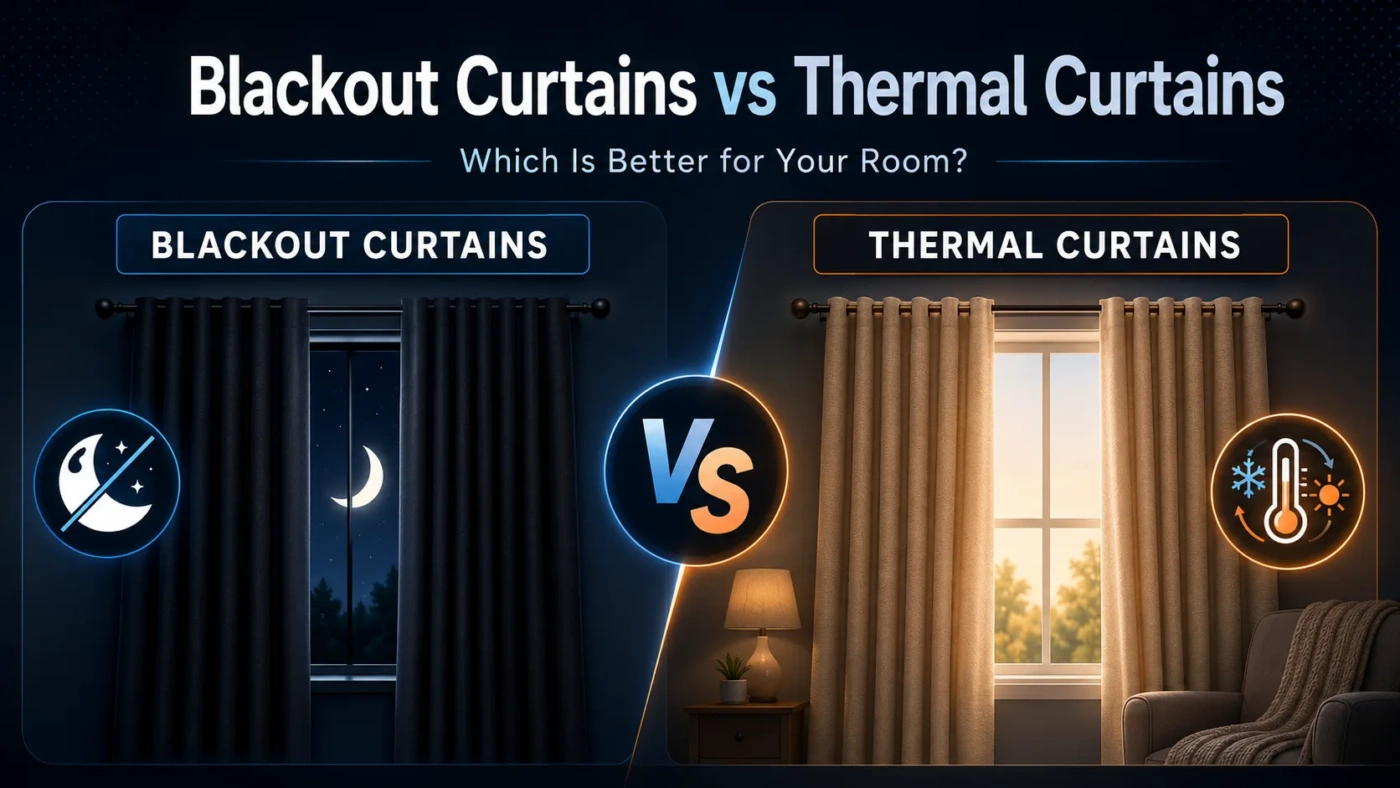
Table of Contents[hide]
Darkness Comes First
Use blackout curtains for bedrooms, nurseries, media rooms, night-shift sleep, and windows facing bright exterior lighting.
Temperature Comes First
Use thermal curtains for drafty windows, strong afternoon sun, seasonal temperature swings, and rooms that feel uncomfortable near the glass.
Is light the problem even when the room temperature is comfortable?
Prioritize verified blackout construction and edge coverage.
Does the room feel hot, cold, or drafty near the window?
Prioritize thermal construction, then inspect the window for air leaks.
Do darkness and temperature both affect the same room?
Use a dual-purpose curtain or add a removable functional liner.
Can the curtain fully cover the frame without blocking equipment?
Plan the rod, track, length, overlap, and safe clearance before selecting the fabric.
Related Posts
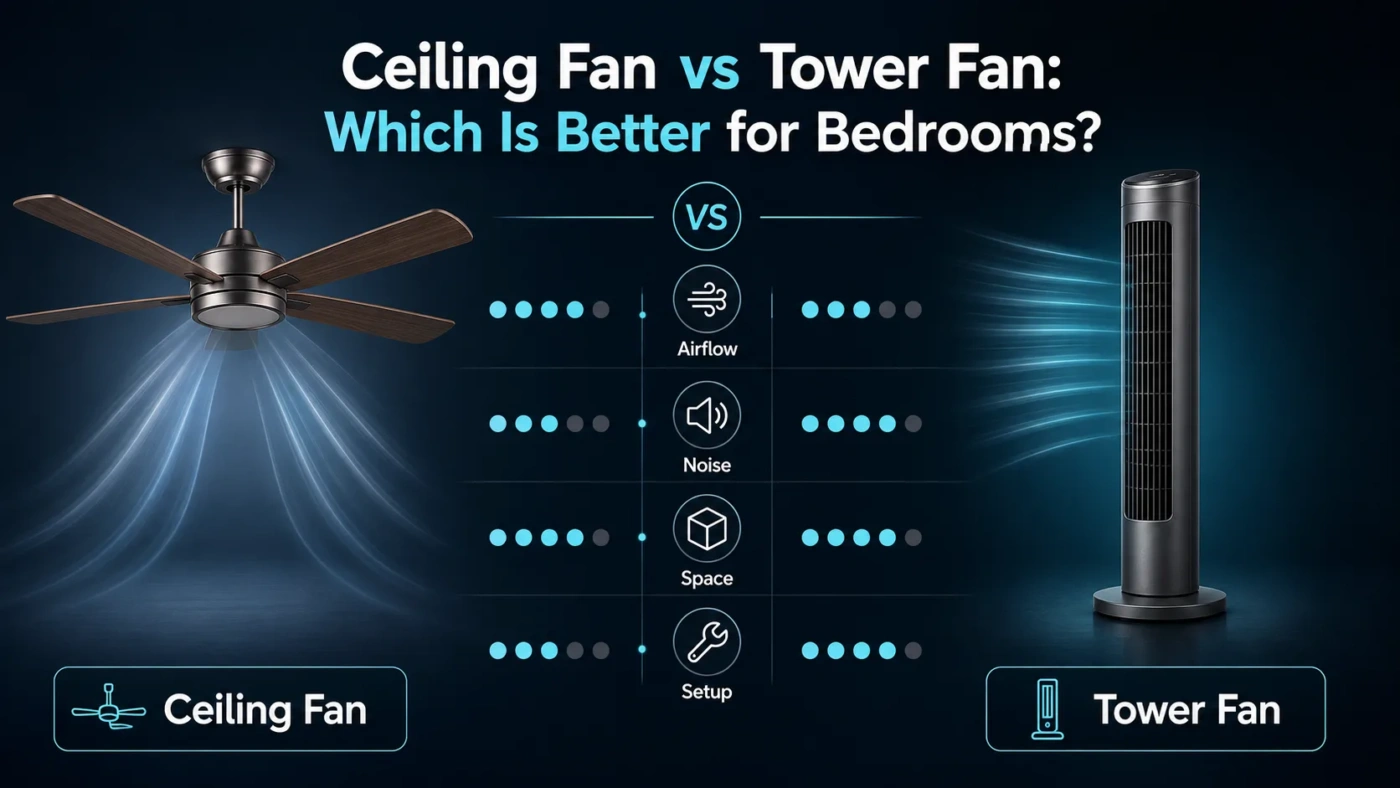
Ceiling Fan vs Tower Fan: Which Is Better for Bedrooms?
Ceiling fans and tower fans can both make a bedroom feel cooler, but they solve different problems. A ceiling fan is usually the better bedroom…
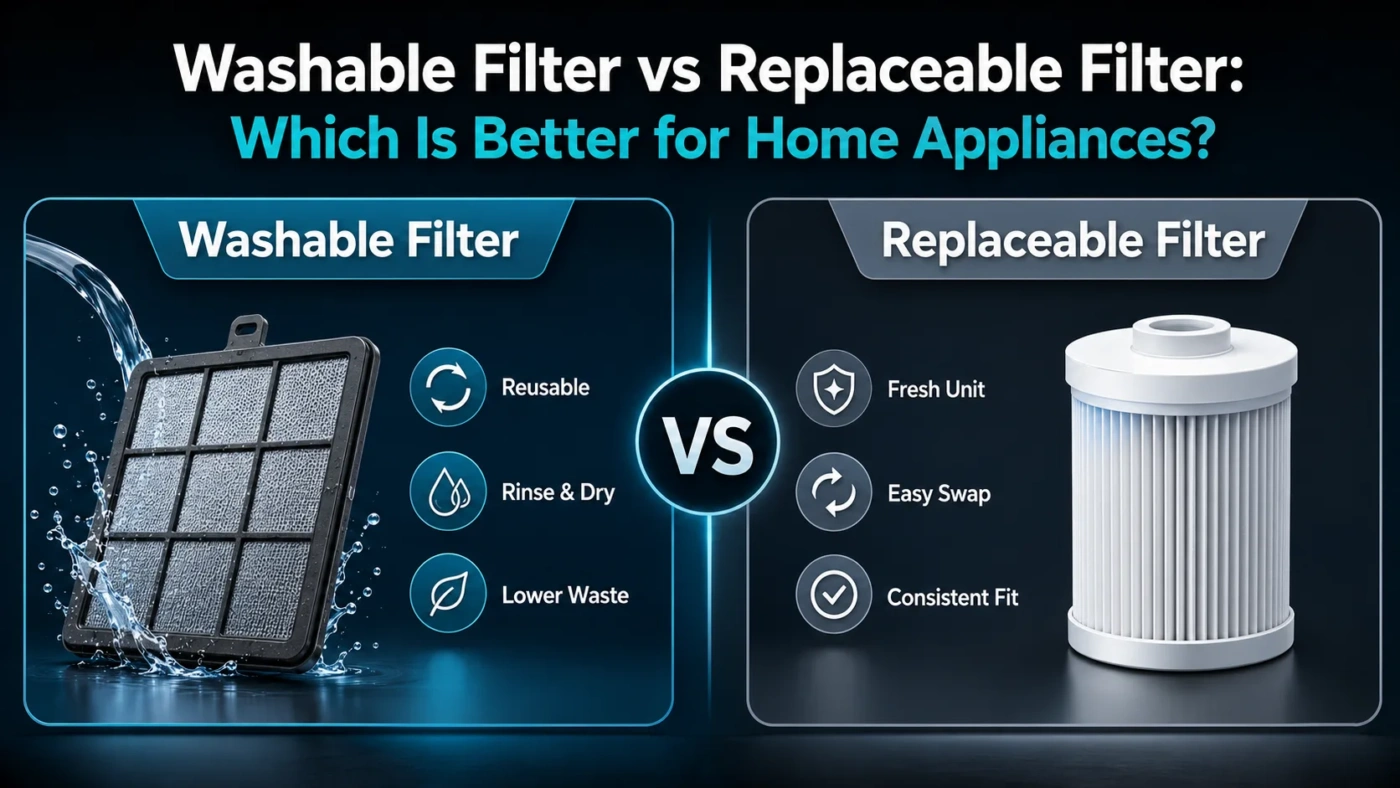
Washable Filter vs Replaceable Filter: Which Is Better for Home Appliances?
Washable filters are better when you want lower ongoing cost, less waste, and simple dust control in appliances that allow rinsing. Replaceable filters are better…

Portable Air Conditioner vs Evaporative Cooler: Which Should You Use?
Portable air conditioners and evaporative coolers can both make a room feel more comfortable, but they solve different problems. Choose a portable air conditioner if…