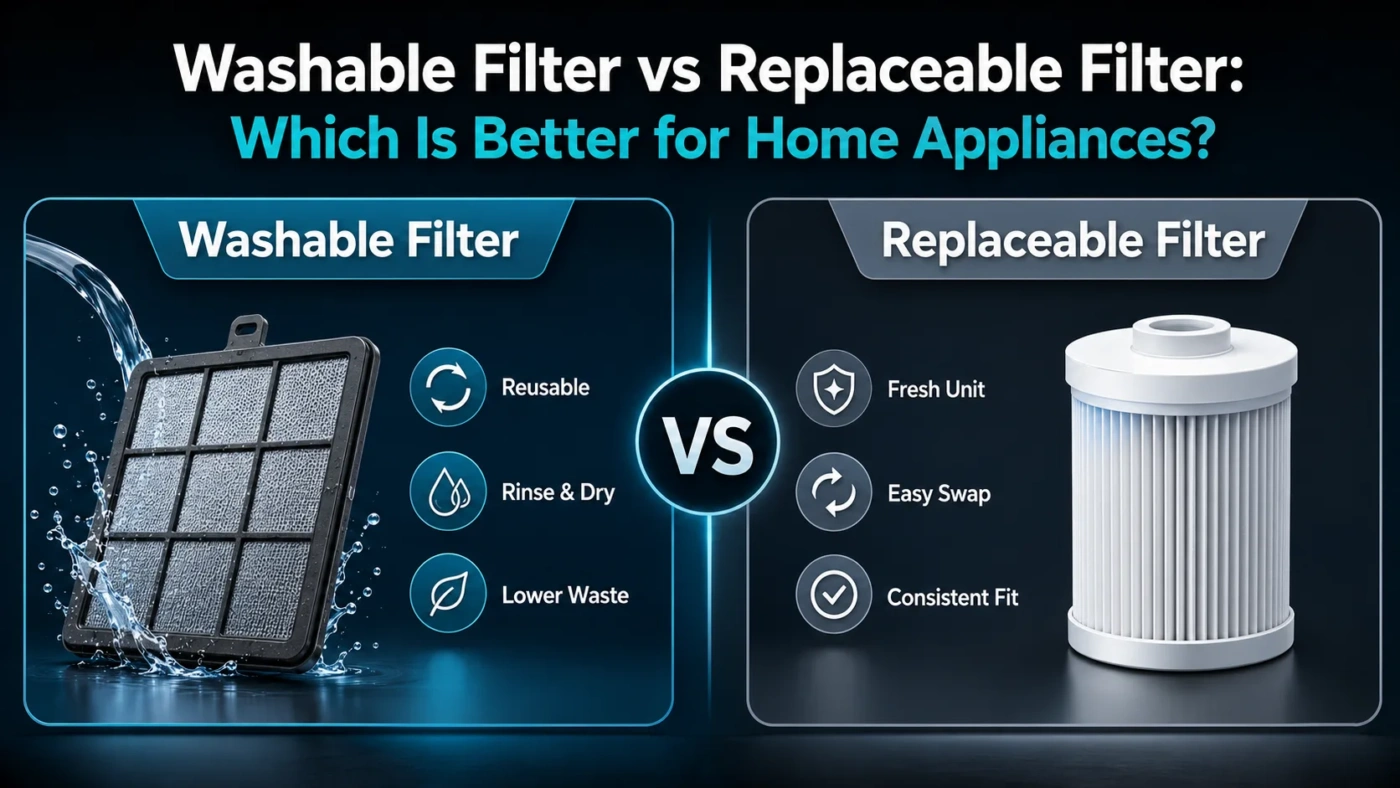
Washable filters are better when you want lower ongoing cost, less waste, and simple dust control in appliances that allow rinsing. Replaceable filters are better when filtration quality, odor control, fine-particle capture, allergy support, or low-effort maintenance matters more. For most home appliances, the better choice depends on the filter’s job: washable filters fit basic protection and reusable pre-filter roles, while replaceable filters fit air quality, hygiene, and performance-sensitive roles.
- Main Differences
- What A Washable Filter Offers
- What A Replaceable Filter Offers
- Where Each Filter Type Fits Best
- Choose A Washable Filter If
- Choose A Replaceable Filter If
- Cost And Long-Term Value
- Airflow, Filtration, And Appliance Performance
- Simple Decision Tree
- Common Misunderstandings
- Washable Does Not Mean Permanent
- Replaceable Does Not Always Mean Better Filtration
- Rinsing Is Not The Same As Restoring
- A Dirty Filter Can Make Either Option Perform Poorly
- Best Choice By User Type
- Short Filter Glossary
- FAQ
- Are Washable Filters Better Than Replaceable Filters?
- Can You Wash A Replaceable Filter?
- How Often Should A Washable Filter Be Cleaned?
- Do Washable Filters Remove Allergens?
- Which Filter Type Is Better For Home Appliances Overall?
| Feature | Washable Filter | Replaceable Filter |
|---|---|---|
| Best For | Reusable dust screening, appliance protection, washable pre-filter use | Fine dust, allergens, smoke, odors, sealed filtration media |
| Ongoing Cost | Lower after purchase | Higher because new filters are needed |
| Maintenance Effort | Needs rinsing, drying, and careful reinstallation | Remove the old filter and install a new one |
| Filtration Consistency | Can decline if not cleaned or dried properly | More consistent when replaced on schedule |
| Fine Particle Capture | Often limited unless the appliance uses a special washable media | Often stronger, especially with pleated, sealed, or carbon media |
| Odor Control | Limited in most home appliances | Better when activated carbon or odor media is included |
| Drying Requirement | Must be fully dry before use | No washing or drying needed |
| Waste | Less filter waste over time | Creates more waste through discarded filters |
| Better Overall Choice | Best for budget-friendly, reusable, basic filtration | Best for cleaner output, convenience, and more reliable filtration |
Main Differences
The main difference is not simply reusable versus disposable. It is what the filter media is designed to capture. A washable filter is usually made to trap larger dust, lint, hair, and debris while allowing airflow to continue. A replaceable filter can use denser pleats, sealed layers, carbon material, or specialty media that would not rinse clean in the same way.
That changes daily use. A washable filter can save money, but it asks for more care. If it is reinstalled while damp, clogged with residue, or damaged by rough cleaning, the appliance may lose airflow or develop unpleasant smells. A replaceable filter costs more over time, but it gives the appliance fresh media at each change.
What A Washable Filter Offers
A washable filter is designed to be removed, rinsed or cleaned, dried fully, and reused. In home appliances, it is common in vacuum cleaners, air conditioners, dehumidifiers, range hoods, some dryers, and certain air treatment devices.
Its strongest advantage is long-term value. You do not need to buy a new filter as often, and you avoid the frustration of finding the exact replacement size. It also reduces waste, which can matter when the appliance needs frequent filter care.
The tradeoff is maintenance quality. A washable filter only works well when it is cleaned on time and allowed to dry completely. Soap residue, trapped dust, bent mesh, or moisture can reduce airflow and may create odor problems in some appliances.
What A Replaceable Filter Offers
A replaceable filter is removed and discarded when it reaches the end of its service life. The new filter brings fresh material, full airflow capacity, and the intended filtration surface back into the appliance.
This makes replaceable filters a better fit for appliances where captured material should not be rinsed back into use. Air purifiers, HVAC returns, vacuum exhaust filters, humidifier wicks, refrigerator water filters, and carbon odor filters often rely on media that is meant to be replaced rather than washed.
The main downside is repeat cost. You also need to track filter size, replacement timing, and compatibility. Still, for fine particles, odors, water contact, or hygiene-sensitive use, replacement is often the cleaner and more reliable option.
Where Each Filter Type Fits Best
Choose A Washable Filter If
- You want to reduce repeat filter purchases.
- The appliance uses the filter mainly to catch lint, hair, dust, or large debris.
- You are willing to clean the filter on a regular schedule.
- You can let the filter dry fully before reinstalling it.
- You prefer a lower-waste option for basic filtration tasks.
- The appliance manual clearly says the filter is washable.
Choose A Replaceable Filter If
- You want easier maintenance with less cleaning work.
- The appliance handles fine dust, allergens, smoke, odors, water, or moisture.
- You need more consistent filtration over time.
- The filter includes pleated media, carbon, paper, fiber layers, or a sealed cartridge.
- You have pets, allergy concerns, cooking odors, or indoor air quality needs.
- The appliance manual says the filter should not be washed.
Cost And Long-Term Value
Washable filters usually win on repeat cost because one filter can last through many cleaning cycles. That does not mean they are always cheaper in practice. If a washable filter clogs, tears, develops odor, or loses shape, it may still need replacement.
Replaceable filters cost more over time, but they can protect appliance performance better when the filter media has a limited service life. In air purifiers, water filters, carbon filters, and humidifier wicks, the value comes from fresh media, not just from having something installed in the filter slot.
Airflow, Filtration, And Appliance Performance
Filters do two jobs at once: they trap material and allow air or fluid to move through. If the filter is too clogged, airflow drops. If the filter media is too loose or damaged, debris can pass through.
Washable filters can perform well when they are clean, dry, and used for the right purpose. They are often not meant to act as the final fine-particle barrier. Replaceable filters can use denser media, but they also need scheduled changes because trapped material builds up inside the filter.
Safe rule: Never wash a filter unless the appliance instructions say it is washable. Some filters look reusable but lose structure, filtration ability, or sealing performance when exposed to water.
Simple Decision Tree
Common Misunderstandings
Washable Does Not Mean Permanent
A washable filter can last a long time, but heat, pressure, dust buildup, grease, minerals, and repeated handling can wear it down. If the filter no longer fits or airflow stays weak after cleaning, it may be time to replace it.
Replaceable Does Not Always Mean Better Filtration
Some replaceable filters are basic dust filters. Some washable filters are well designed for their job. The appliance type and filter media matter more than the reusable or disposable label alone.
Rinsing Is Not The Same As Restoring
Water can remove loose dust from washable mesh or foam, but it cannot restore every type of media. Carbon, paper, dense fiber, and certain pleated materials are usually meant to be replaced.
A Dirty Filter Can Make Either Option Perform Poorly
A washable filter that is not cleaned and a replaceable filter that is not changed can both reduce airflow, increase strain, and make the appliance less effective.
Best Choice By User Type
| User Type | Better Fit | Reason |
|---|---|---|
| Budget-Focused Household | Washable Filter | Lower repeat cost when the filter is cleaned properly. |
| Allergy-Sensitive Household | Replaceable Filter | Fresh fine-particle media is usually more dependable. |
| Pet Owners | Depends On Appliance | Washable pre-filters help with hair, while replaceable filters are better for dander and odors. |
| Low-Maintenance User | Replaceable Filter | No rinsing, drying, or cleaning routine is needed. |
| Eco-Conscious User | Washable Filter | Less filter waste when the appliance supports washable use. |
| Air Quality-Focused User | Replaceable Filter | Better fit for sealed media, carbon layers, and fine-particle capture. |
Short Filter Glossary
FAQ
Are Washable Filters Better Than Replaceable Filters?
Washable filters are better for lower cost and reusable dust control. Replaceable filters are better for fine particles, odors, hygiene-sensitive use, and consistent filtration.
Can You Wash A Replaceable Filter?
Only if the appliance instructions clearly say it is washable. Many replaceable filters can be damaged by water, even if they look sturdy.
How Often Should A Washable Filter Be Cleaned?
It depends on the appliance, dust level, pet hair, cooking residue, and usage. Clean it when airflow drops, visible dust builds up, or the appliance schedule recommends it.
Do Washable Filters Remove Allergens?
Some can catch larger particles, but many washable filters are not designed for fine allergen capture. For allergy-focused air cleaning, a replaceable fine-particle filter is often the better fit.
Which Filter Type Is Better For Home Appliances Overall?
For basic dust protection, choose a washable filter when the appliance supports it. For air purifiers, odor control, water filtration, humidifiers, and fine-dust capture, choose a replaceable filter.